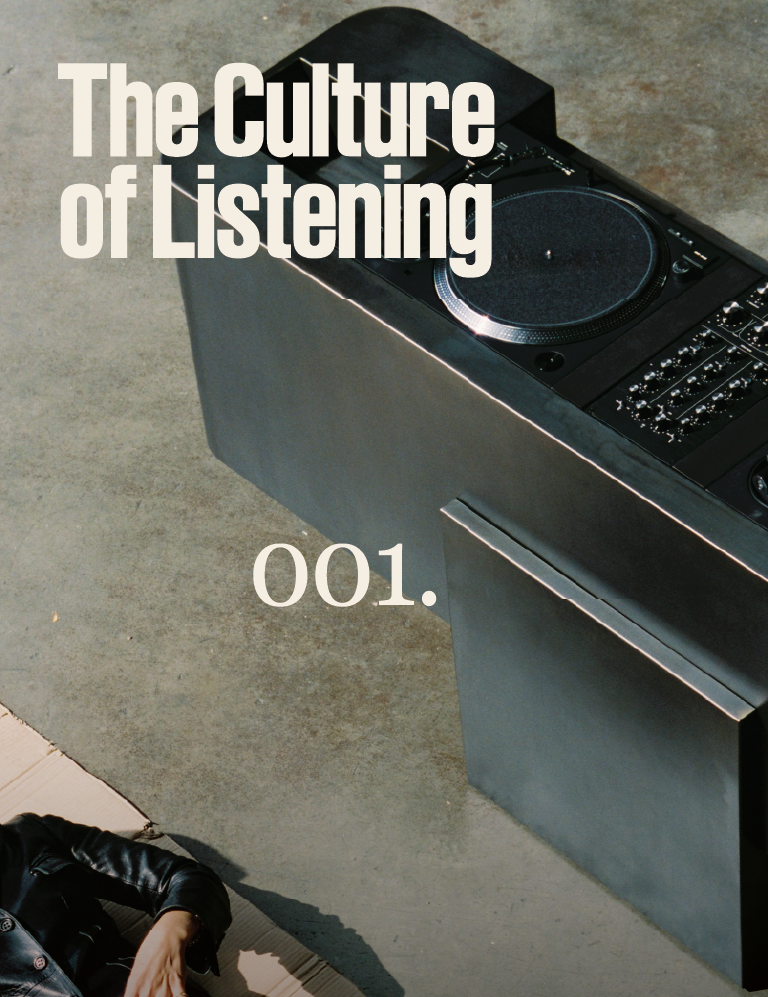
During Art Basel Paris 2026, Franco-American designer Arielle Assouline-Lichten and her studio Slash Objects launched The Culture of Listening, a travelling project on sound and design that opened in Paris with the X Deck, a mirror-polished DJ console built as a monument to nightlife.
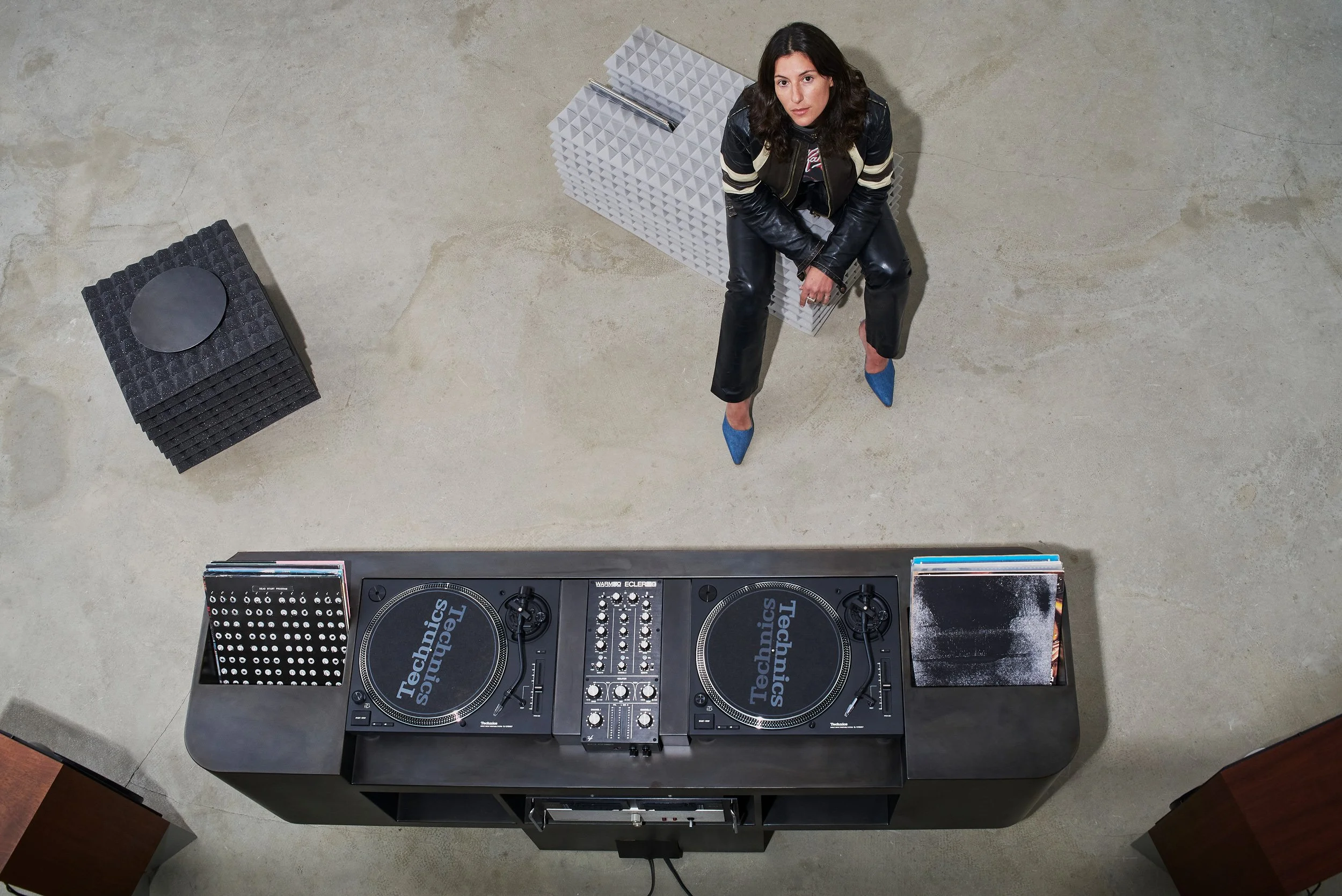
Photography, Slash Objects. Above and blow, Arielle Assouline-Lichten, founder.
The best seat in the house used to face a screen. Increasingly, it faces the speakers. THE FLUXX has followed the listening room from cult obsession to cultural institution: Devon Turnbull’s hand-built OJAS sound systems filling the Carnegie Library at Cooper Hewitt, Smithsonian Design Museum from December 2025 to August 2026, the fourth city in a series that began in New York in 2022, and MOGO bringing the Tokyo jazz kissa to Milan’s Isola. The movement already has a philosophy (pay attention), a format (vinyl) and a dress code (none required). What it has lacked is furniture worthy of the ritual.
Enter Slash Objects. Founded by Arielle Assouline-Lichten, a Franco-American architect, artist and designer, the New York and Paris studio has been making collectible furniture since its debut at Sight Unseen in 2016. This month it turned its attention to sound. During Art Basel Paris, Slash Objects and editorial director Pauline Marie Malier of PMM Studios launched The Culture of Listening, a travelling research project on how we design for music. Its first chapter, The New Architecture of Sound, ran from 21 to 25 October at Espace Victoire, a renovated industrial loft at 9 Rue d’Aboukir, a short walk from the Palais-Royal.
A Monument to Nightlife
Photography, Slash Objects.
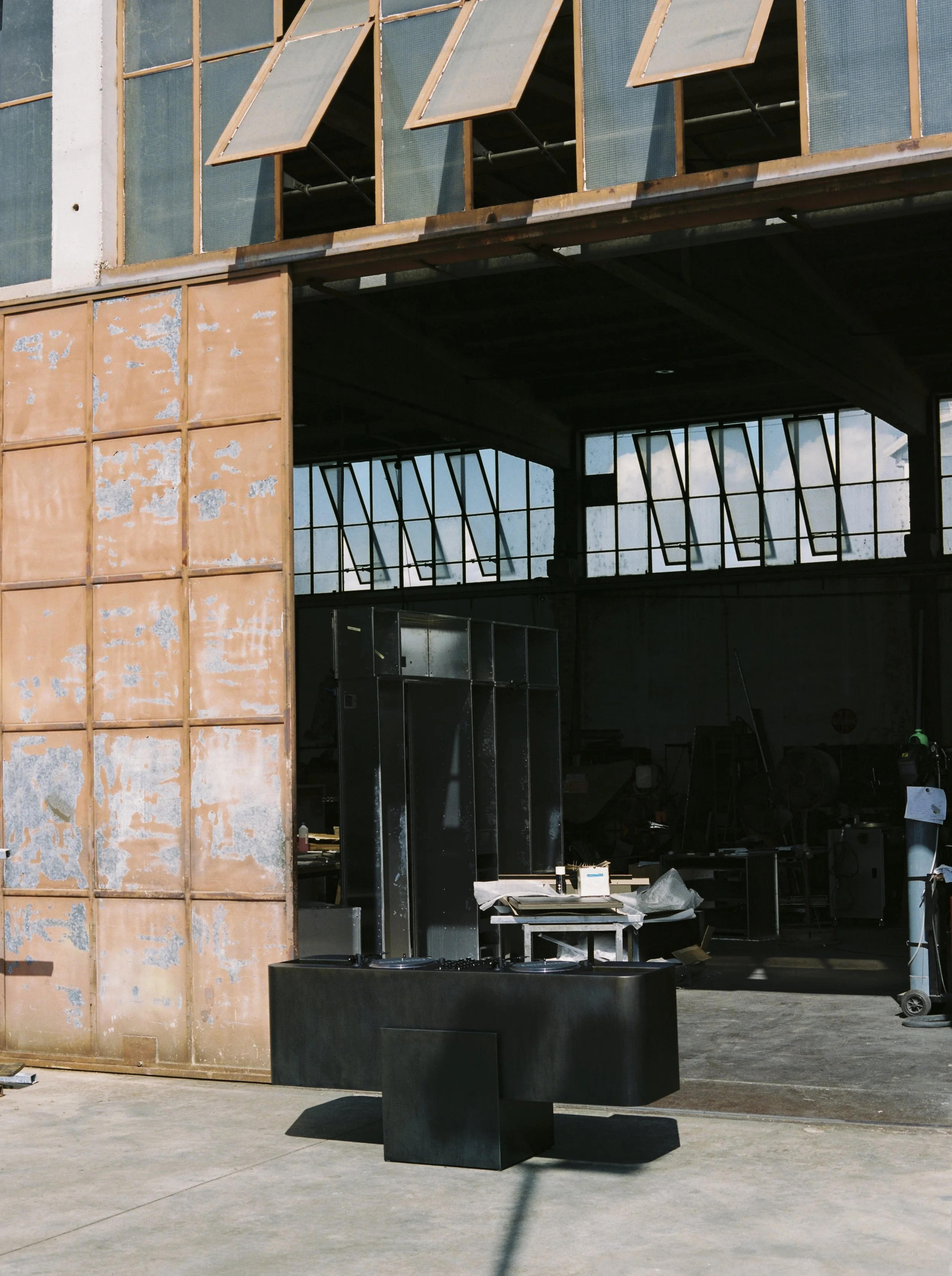
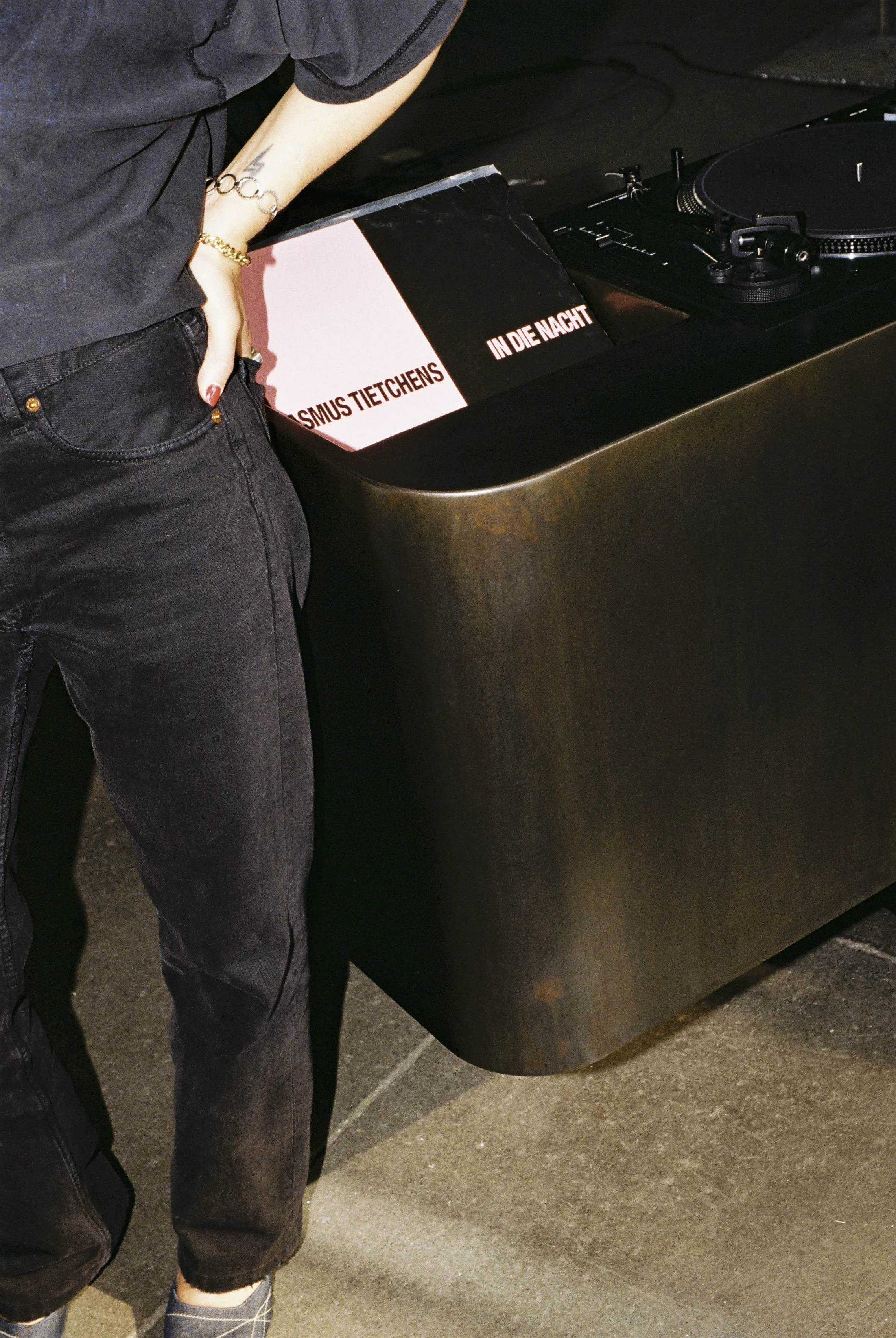
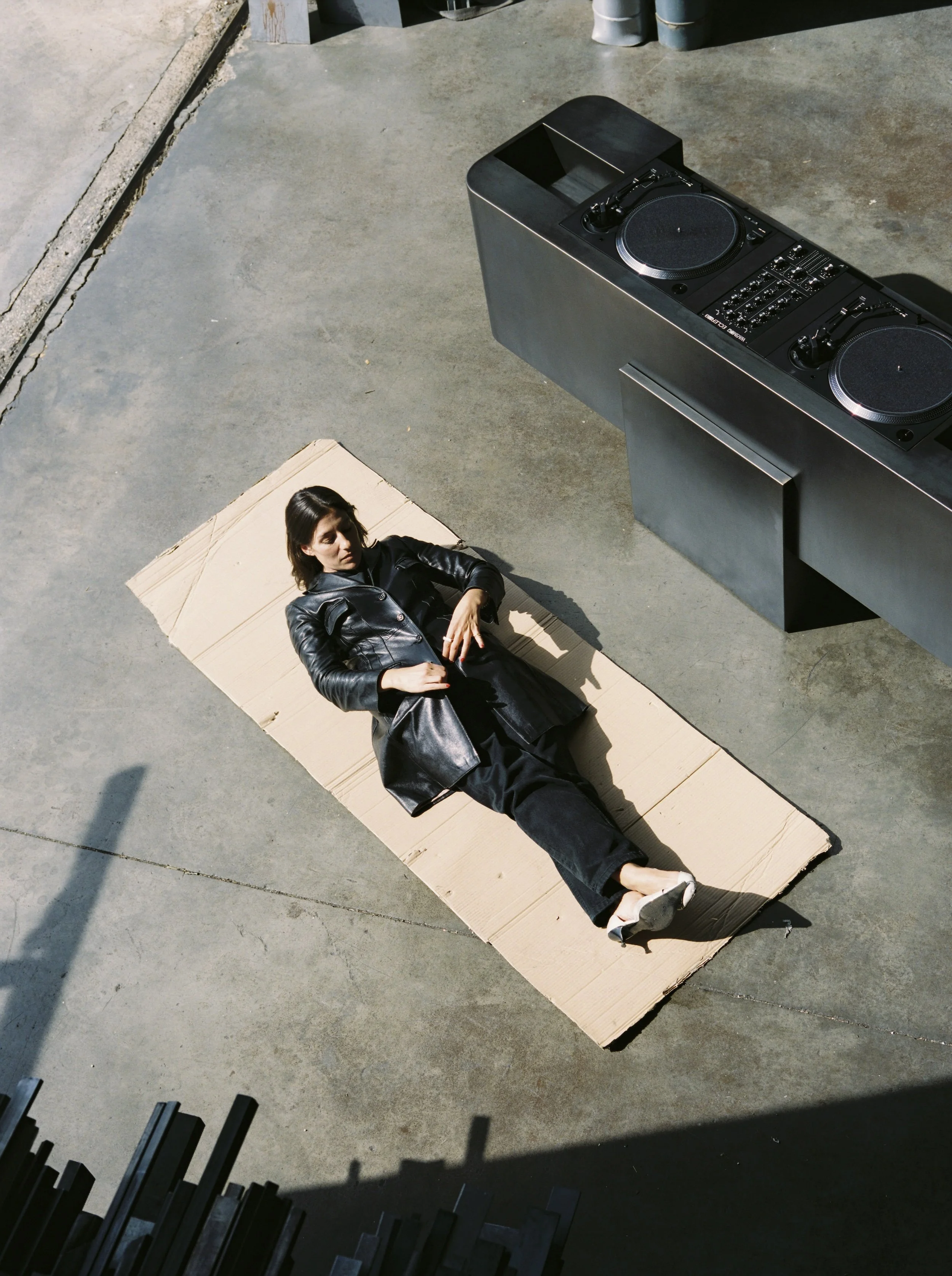
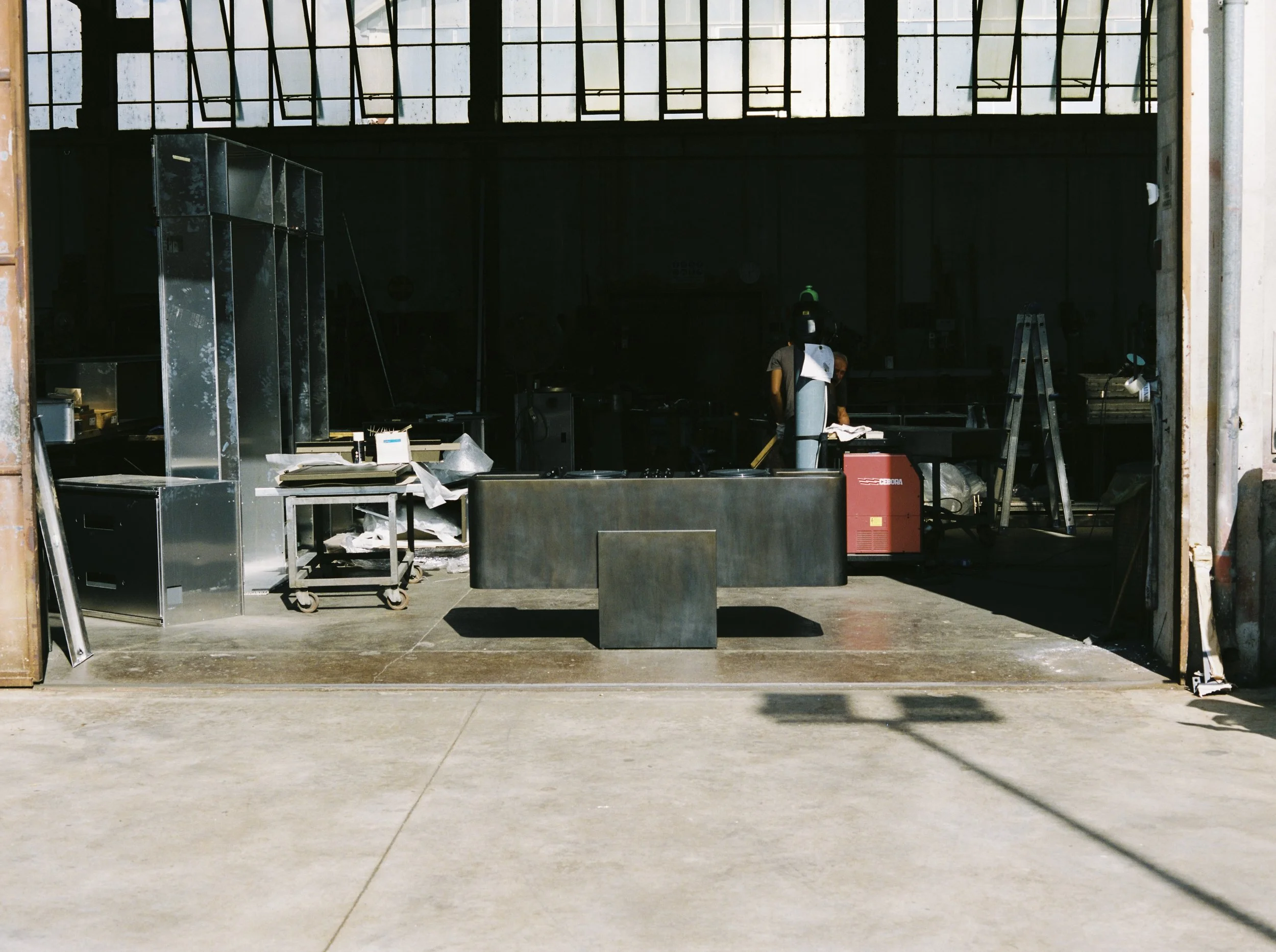
At the centre of the room stood the X Deck. At 190cm long, it gathers two Technics SL-1200 turntables, a mixer, record storage and concealed cable management into a single architectural form: a long, rounded body of polished stainless steel balanced on one slab of brass, like a bar counter that has wandered in from a very good party. For Paris, Assouline-Lichten showed the X Deck Anthracite, in steel with an acid patina. Records sit upright at each end, sleeves facing out, so choosing the next one becomes part of the show.
“I designed the X Deck as a monument to nightlife, all that glitters and is sexy about the creation of music, and the mystique of late nights embodied in a piece of design,” says Assouline-Lichten. “The X Deck was born from a desire to bring music back into the centre of the room, not hidden in a cabinet but present, visible and shared.”
The console belongs to The X Series, five made-to-order pieces, among them an armoire, a bureau and two coffee tables, that pair stainless steel with brass. The X stands for a crossroads, of materials and of the moment, and the high polish does exactly what the studio intends: it turns the room, and everyone in it, into a liquid reflection. In the studio’s New York showroom on Centre Street, the X Deck plays through a pair of vintage Bang & Olufsen BeoLab 8000 speakers, which is about as chic as a sound system gets.
Paris gave it a voice. The opening night on 21 October belonged to Yu Su, the Kaifeng-born, London-based composer and DJ whose ambient and left-field dance records have appeared on Music From Memory, RVNG Intl. and Ninja Tune’s Technicolour. Listening sessions followed all week, and an accompanying publication brought together FIP Radio selector Maxime Barré, curator and critic Fatima Bocoum, audio engineer Matéo Garcia and photographer Axel Auréjac.
Who Gets to Design the Way We Listen?

Photography, The Culture of Listening, Paris, 2026, Slash Objects.
Here is the quietly radical part. The listening-room revival has largely been told through men and their machines: the horn loudspeaker, the valve amplifier, the collector with 4,000 records and opinions about every one. The studio is no different. USC Annenberg’s Inclusion Initiative found that women held just 5.9 per cent of producer credits on the Billboard Hot 100 year-end chart in 2024. The first chapter of The Culture of Listening, by contrast, was conceived, curated and opened by women, from Assouline-Lichten and Malier to Yu Su at the decks.
Assouline-Lichten comes to sound from architecture rather than audio. She holds a Master of Architecture from Harvard and a degree in critical theory and visual media from NYU, worked with BIG, Kengo Kuma and Snøhetta, and served as a Principal of OfficeUS at the Venice Biennale. Her signature is what she calls glam minimalism, simplicity with impact, and it has moved through recycled rubber made luxurious, the hardware-free Coexist collection and onyx-topped Oni tables, collecting Best of NYCxDesign and American Design Honors along the way. Where the hi-fi world fixates on the speaker cone, she designs the stage around it. “As an architect, I’ve always been interested in how objects shape the way people gather,” she says.
The Culture of Listening is built to travel. Future chapters are envisaged for Salone del Mobile in Milan, 3 Days of Design in Copenhagen, Shanghai Design Week and NYCxDesign, each with a new object, a new question and a new publication, all gathering eventually into a single book. If the last few years taught design that people want to listen properly again, Slash Objects is asking the better question: what should the room look like when they do? On this evidence, the answer is mirrored, made for dancing and very much in the centre of the floor.Enjoy!
DISCOVER MORE FLUXX DESIGN & TECH NEWS