From fashion to the floor: the founder and creative director of the Barcelona rug studio on colour as structure, the enduring appeal of the Turkish knot, hand-spun yarn, and why the rug world could do with a little less mystery.
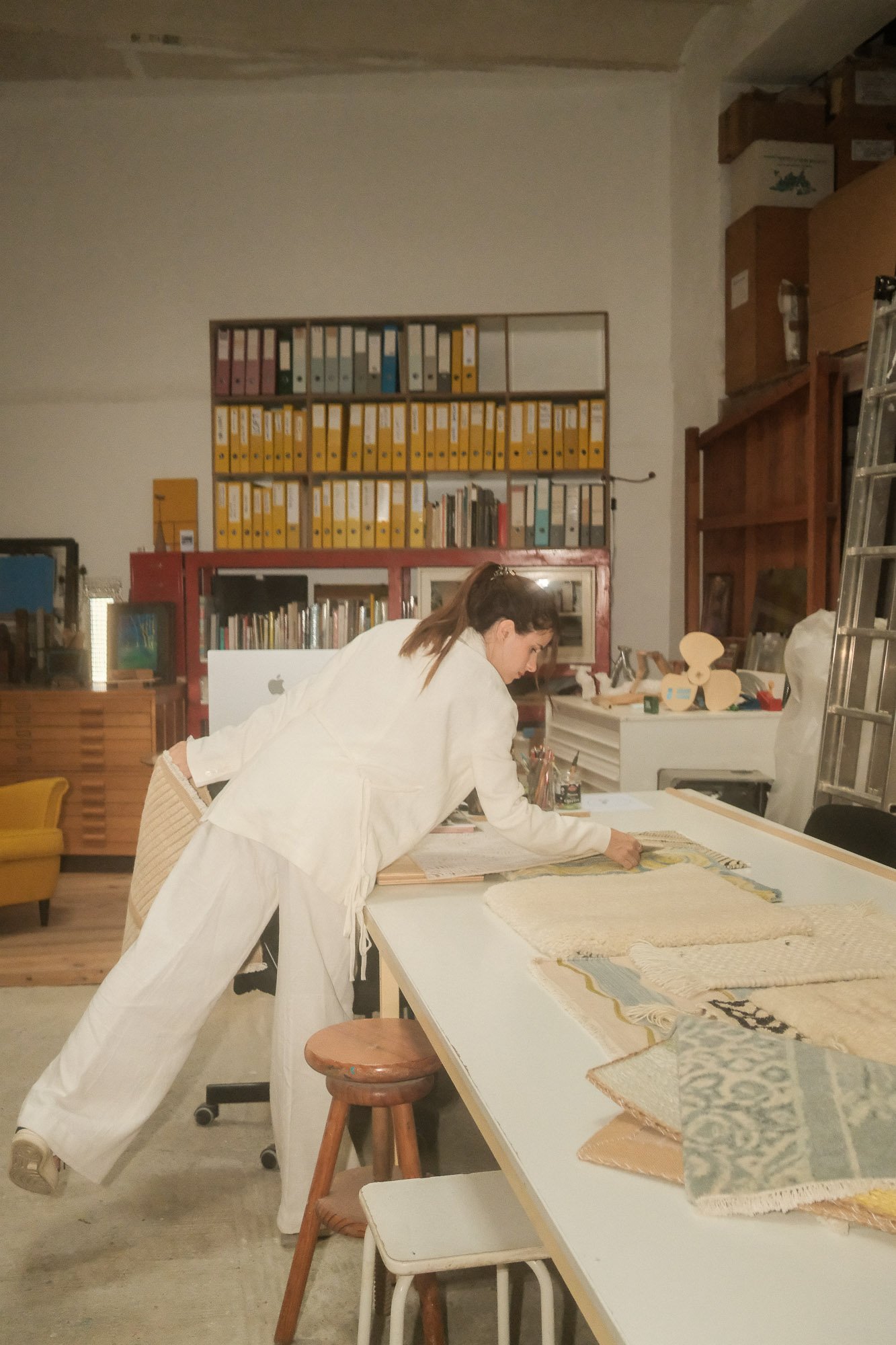
There is a point in Nathalia Gregores’s work where a rug stops being a surface and begins to behave like architecture. Push the red of a centre field a few degrees towards pink, take a single colour away, and the same geometry settles into an entirely different room. That sensitivity to undertone, texture and the decisions most of us never see is the quiet signature of Soline Imera, the Barcelona rug studio Gregores founded after a career that began in fashion and moved through São Paulo and London, shaped along the way by close work with artisans in India and Morocco.
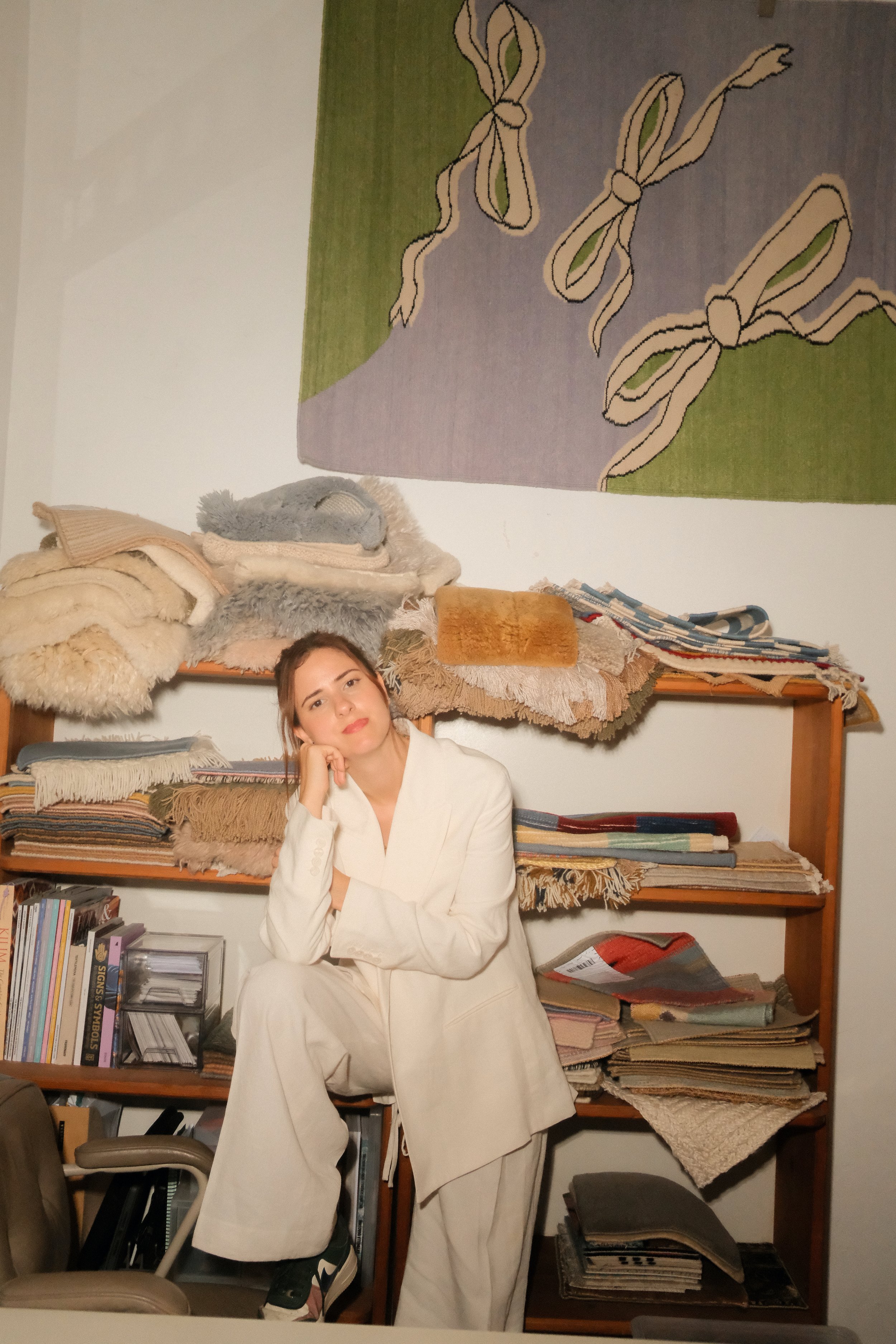
Photography, Nathalia Gregores, founder of Soline Imera by Julie Fomina.
Earlier this year the studio expanded its debut designs into new colourways and launched a Trade Portal, a working library that opens its archive, rug qualities and borrowable samples to interior professionals, each documented with technique, materials and specification. For Gregores it is part of a broader ambition: to take some of the mystery out of an industry she candidly calls opaque, and to put the knowledge behind the studio door into the hands of the designers who specify her work.
Here, she talks to THE FLUXX about the Turkish knot and the lazy lines of Turkish kilims, what ethical production looks like when a budget tightens, and the museums, tapas bars and modernista entrance halls that keep her looking.
You trained in fashion before turning to rugs, and your role at Soline Imera spans design, sourcing and studio leadership. Where does your creative focus sit now?
Right now the focus is simply making rugs. I want to design a lot of them, keep exploring the medium, and put out collections that mean something to me. That part is quite personal. I design rugs because it is what I enjoy doing, and I am happy when the pieces resonate with other people, when someone wants to live with them. But there are a few sides to it. There are the collections that are fully my own voice, and then there is the work the studio is commissioned to do by interior designers who want something specific or unique for their project. And, increasingly, there are collaborations with artists, which are quite fun, because they come to me without knowing the rules of the medium, so they mix textures and materials in a way I likely would not have put together without those discussions.
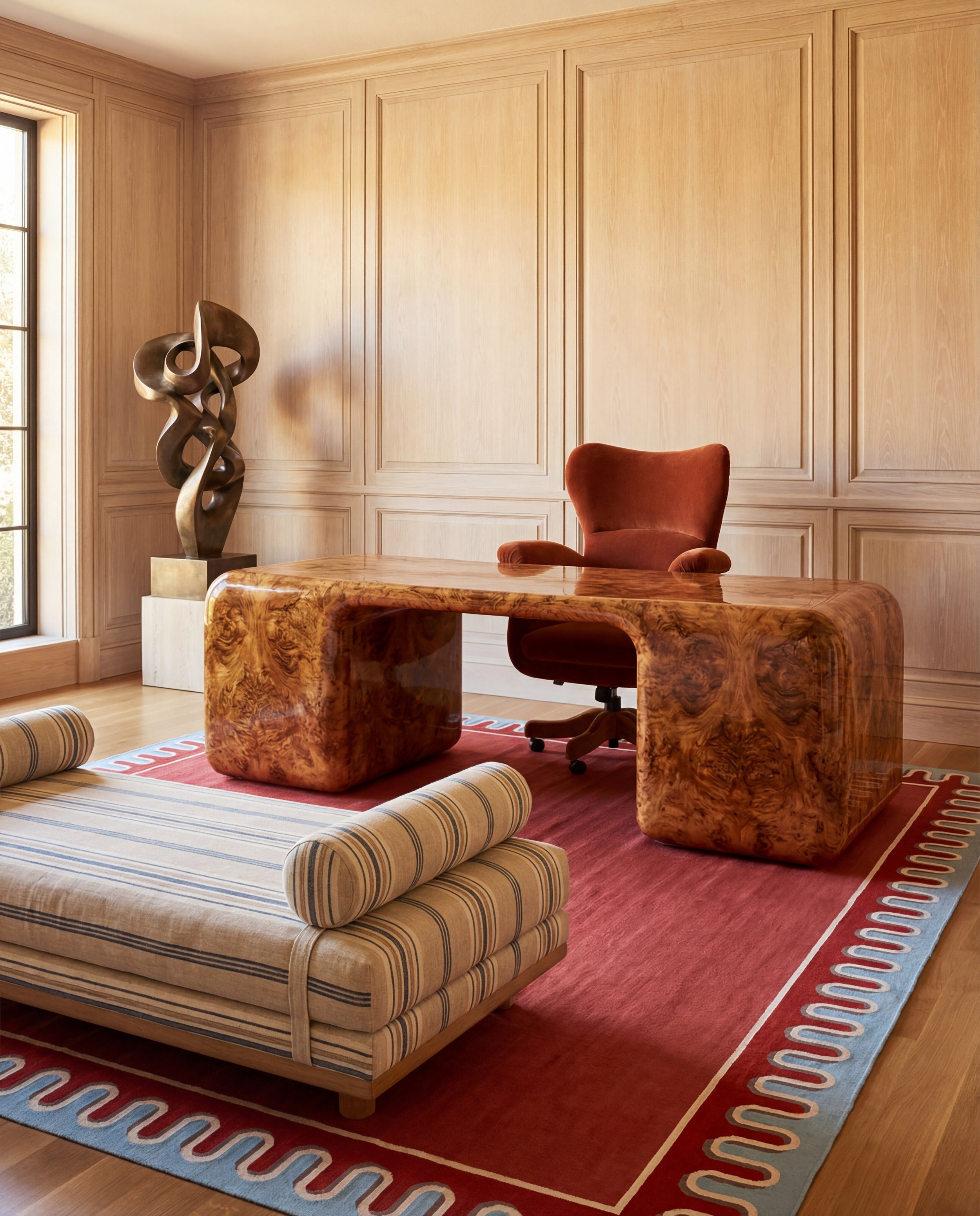
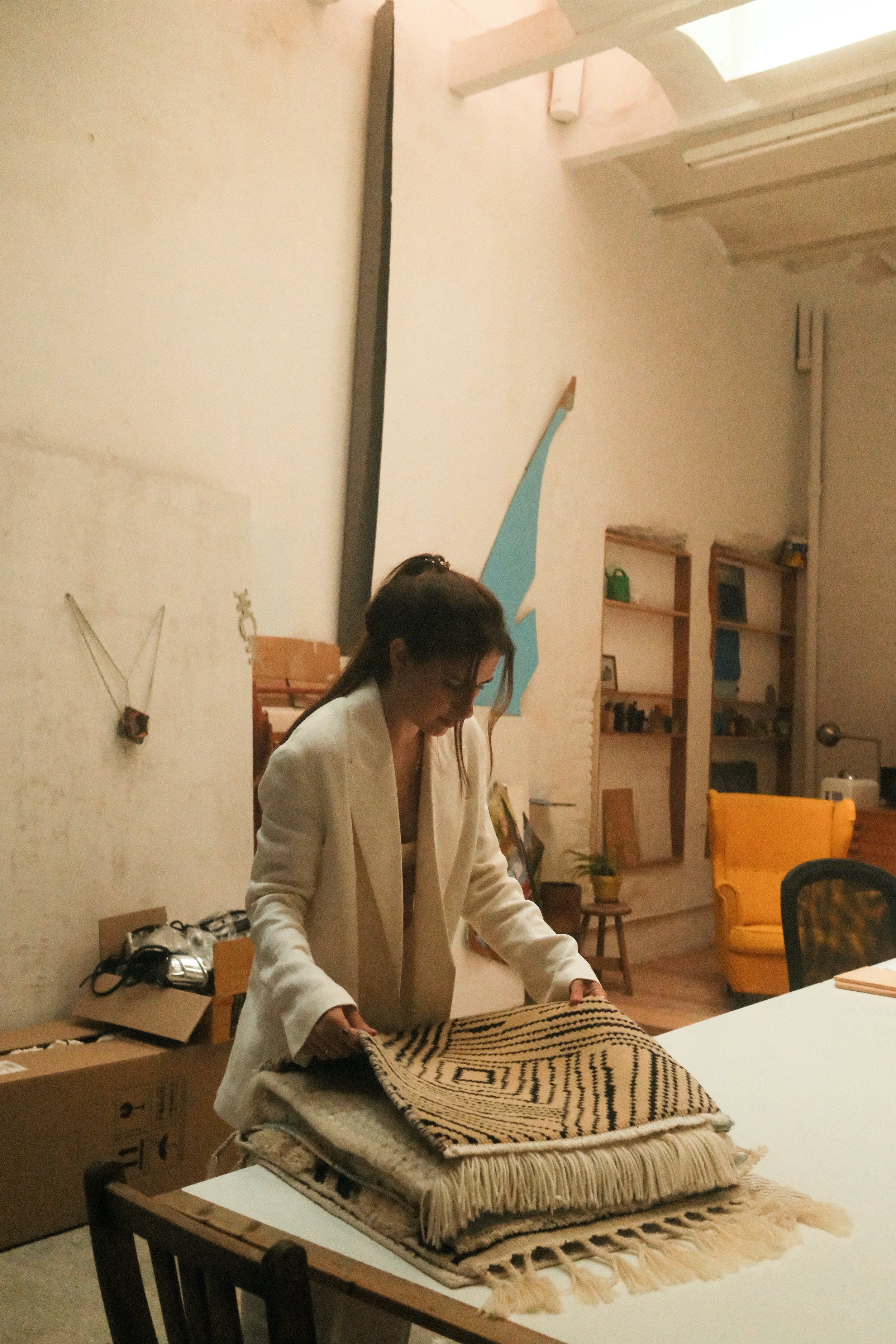
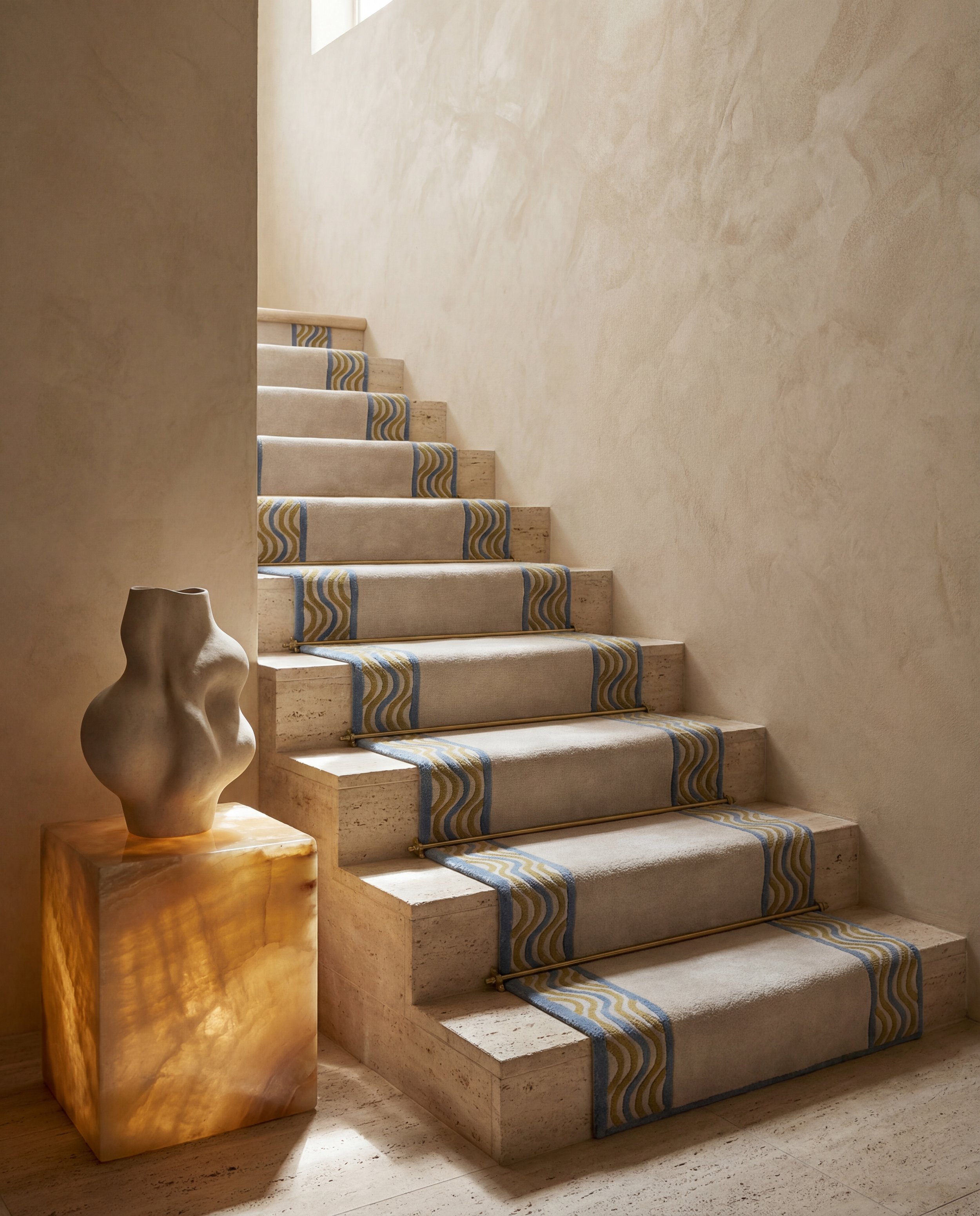
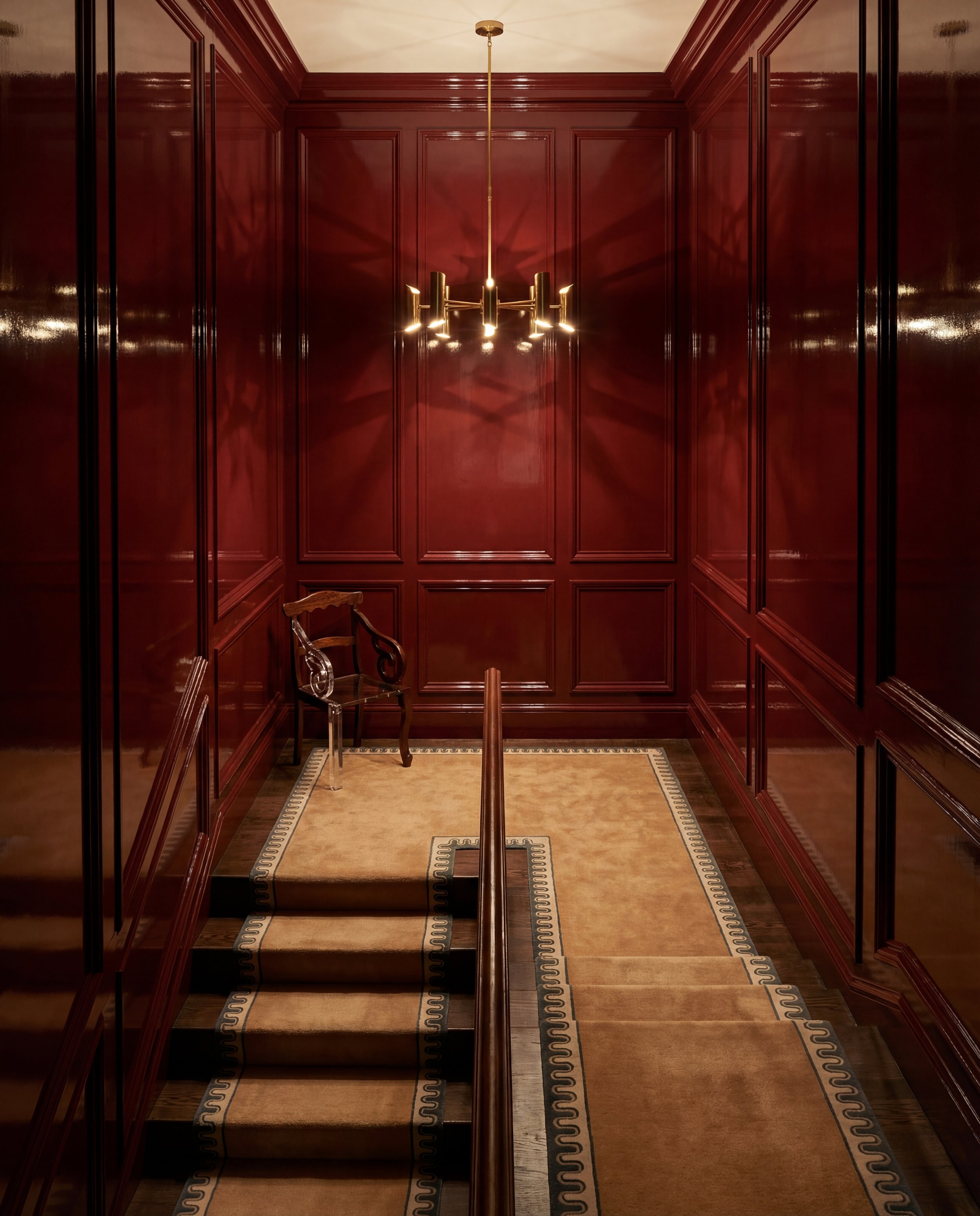
Photography top, Theo Cordovan. Bottom left, founder Nathalia Gregore’s by Julie Fomina and right, flo Pearl rug runner.
Was there a specific moment, in London or later in India and Morocco, when you realised rug making was not just an extension of your textile work but the thing you wanted to build a studio around?
It was not one single moment, more something that settled over a few years. After designing rugs for a while and being part of the industry, I felt I had found my place, the thing I am actually good at. That happened in London, working on projects with very talented, imaginative interior designers who were doing genuinely interesting work.
I felt lucky being part of these projects, seeing my designs land in those rooms, knowing how much of myself had gone into them and how I could be an excellent partner for those studios. That is when I started to grow enough confidence to build something of my own.
You have said colour is a structural choice, that shifting a palette shifts the negative space in a room. When you are developing a new colourway, at what point do you know it is working, rather than simply looking nice?
It is easy to just call it instinct, but there is always method underneath, and years of working that way turn the logic into something that feels like intuition. A lot of it comes down to undertone, to how a colour sits next to the ones around it and also how the final palette makes me feel.
In the end, I am designing a loose object that will become part of someone’s whole interior, so the final reading never fully belongs to me. That is the exciting part, seeing where the rug ends up living.
The expanded colourways are described as tests of how the same geometry reads under different temperature, contrast and saturation. Was there a design that surprised you once you saw it in a colourway you had not originally imagined for it?
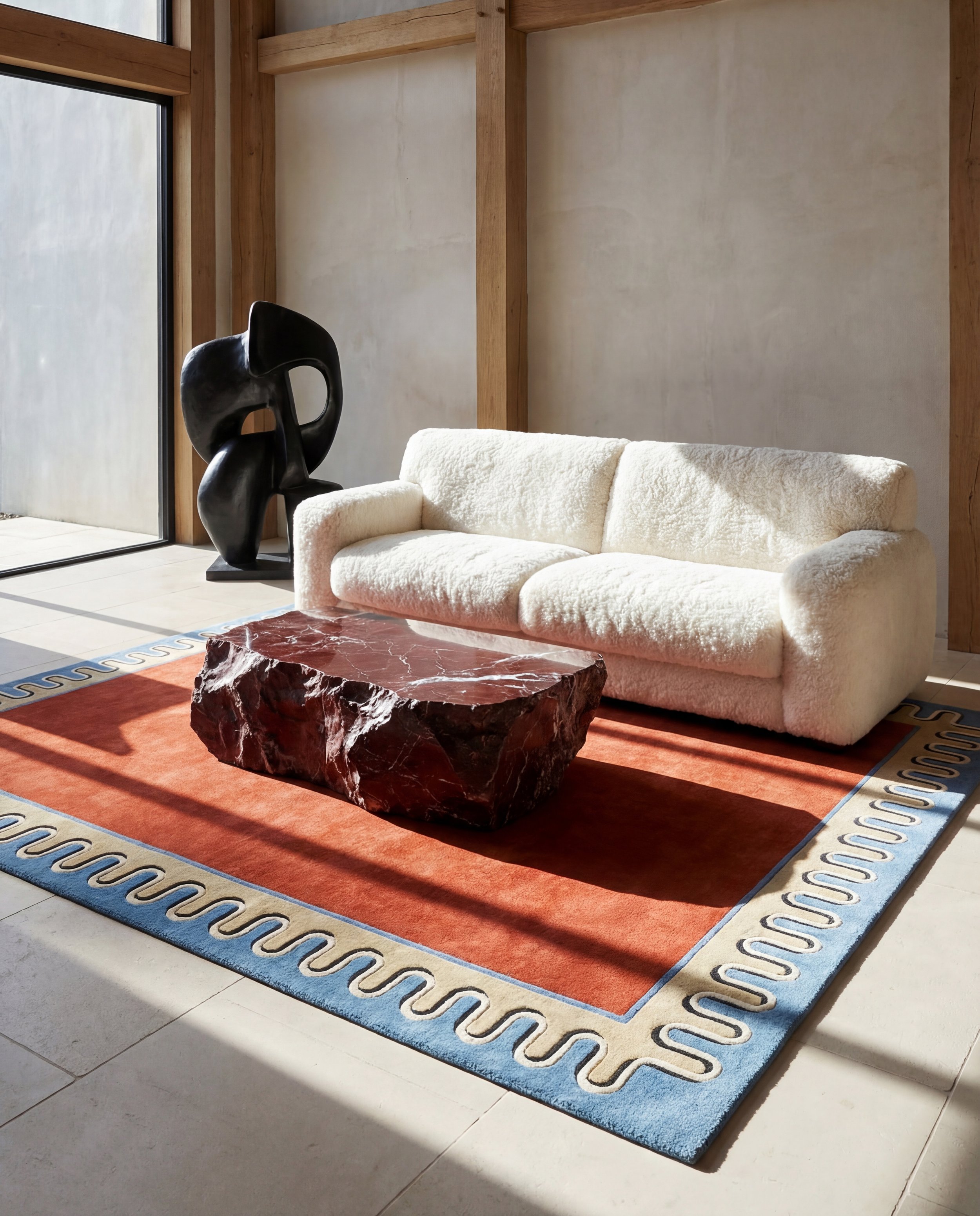
Photography, Theo rug in Cognac.
The Theo rug surprised me. The first version had a blue border, a red centre field, and a light ochre area running through the border. It is not an easy design to recolour because there is line detail in it. I was working through variations, and I made a render of one that, on paper, was almost identical to the first. I had only pushed the red slightly towards pink and taken one colour out, so it became essentially just red and blue. The two look almost the same in colour, but they feel completely different.
The first colourway, Cognac, feels stronger, more out in the open. The second, Cordovan, is more muted, more grounded. I would not choose between them, because each one belongs to a different room.
The new Trade Portal is framed as a working library of technique, materials and specification, built to help studios move faster from shortlist to sampling. What gap were you watching designers struggle with before you built it?
I was just trying to make everyone’s lives easier. I have a studio full of samples and resources, and I kept thinking about all the designers I would like to work with who cannot easily come and see it in person. Even at a meeting, or posting samples out, there is only so much that gets across. The Trade Portal opens that up, it gives them a view of what is actually here. It also helps them put presentations together for their own clients, and it makes the communication easier all round, with their client and with me.
The other part is that the rug world is quite opaque. The information is often just not there. A lot of interior designers may not care about the origin of the wool in the rug, or whether it is sixty knots or eighty. They care how it looks and how it feels, and that is fair. But I still want to put all the information I have in front of them, because knowledge lets people make better decisions. It helps a designer understand why one piece costs more than another, and explain that to their own client. I am trying to take some of the mystery out of it. I am curious, and I care about the details, so I would rather share what I know than keep it behind the studio door.
Of the weaving techniques you learned working directly with artisans in India and Morocco, is there a particular knot, dye process or finish you have fought to keep in Soline Imera’s production, even when it is slower or harder to scale?
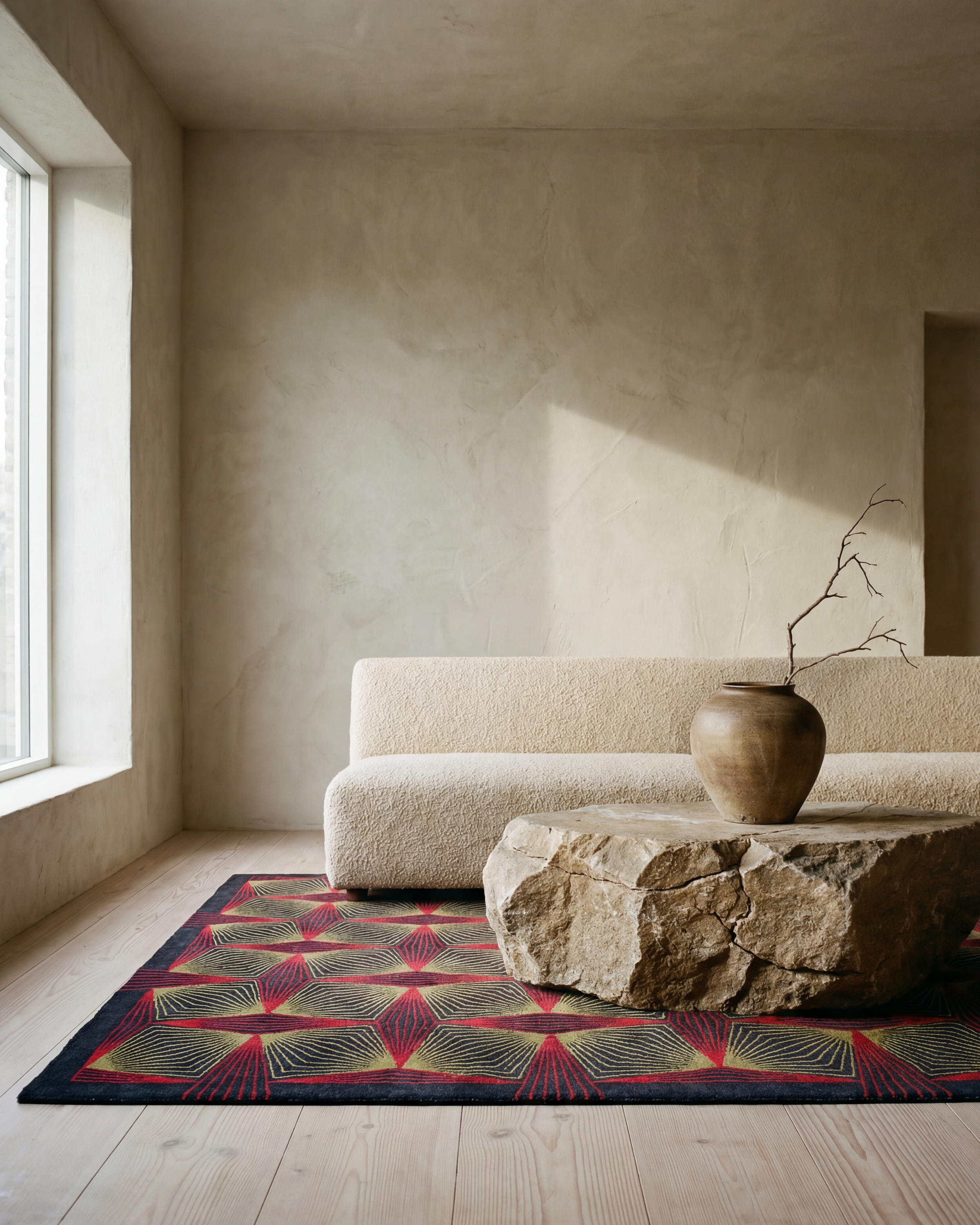
Photography, rug Crystal Palace in garnet.
Photography left, Nathalia Gregore’s by by Julie Fomina. Right, Theo Lion runner.
The Turkish knot is one I am drawn to, and I use it whenever it suits a design. I like it partly because it is less common than the Persian one. You do not find it easily in the finely knotted rugs coming out of India, or in contemporary design, which gives it a certain aura to me. We often work it at lower knot counts, where it has real character, and it is a strong knot that holds up especially well.
I also love the kilims woven in Turkey, in particular the lazy lines technique they use. The weaver works one colour section at a time instead of weaving the rug row by row, as is common in India. It requires more artistic solutions from the weaver, and the result is a pattern with more natural movement. The techniques are available, but yes, they are slower, which requires more flexibility with lead times.
You are involved with Label STEP and speak often about material integrity and social responsibility. Where does that commitment get tested most, in a decision about a supplier, a technique or a price?
Price and technique, because the two can be tied together. The commitment gets tested when a client comes with a very tight budget. That is the moment you are pushed to value engineer, to reach for a cheaper wool or a cheaper construction. Some people genuinely only want a rug for five to eight years, and that is a legitimate choice once we all understand it.
On the supplier side I feel more settled. I trust the work Label STEP does, going into the workshops, checking conditions, supporting the artisans and their education. India is a very different world to work in, and it matters to me that the people making our rugs are treated fairly, and that we are adding something to the community we are part of.
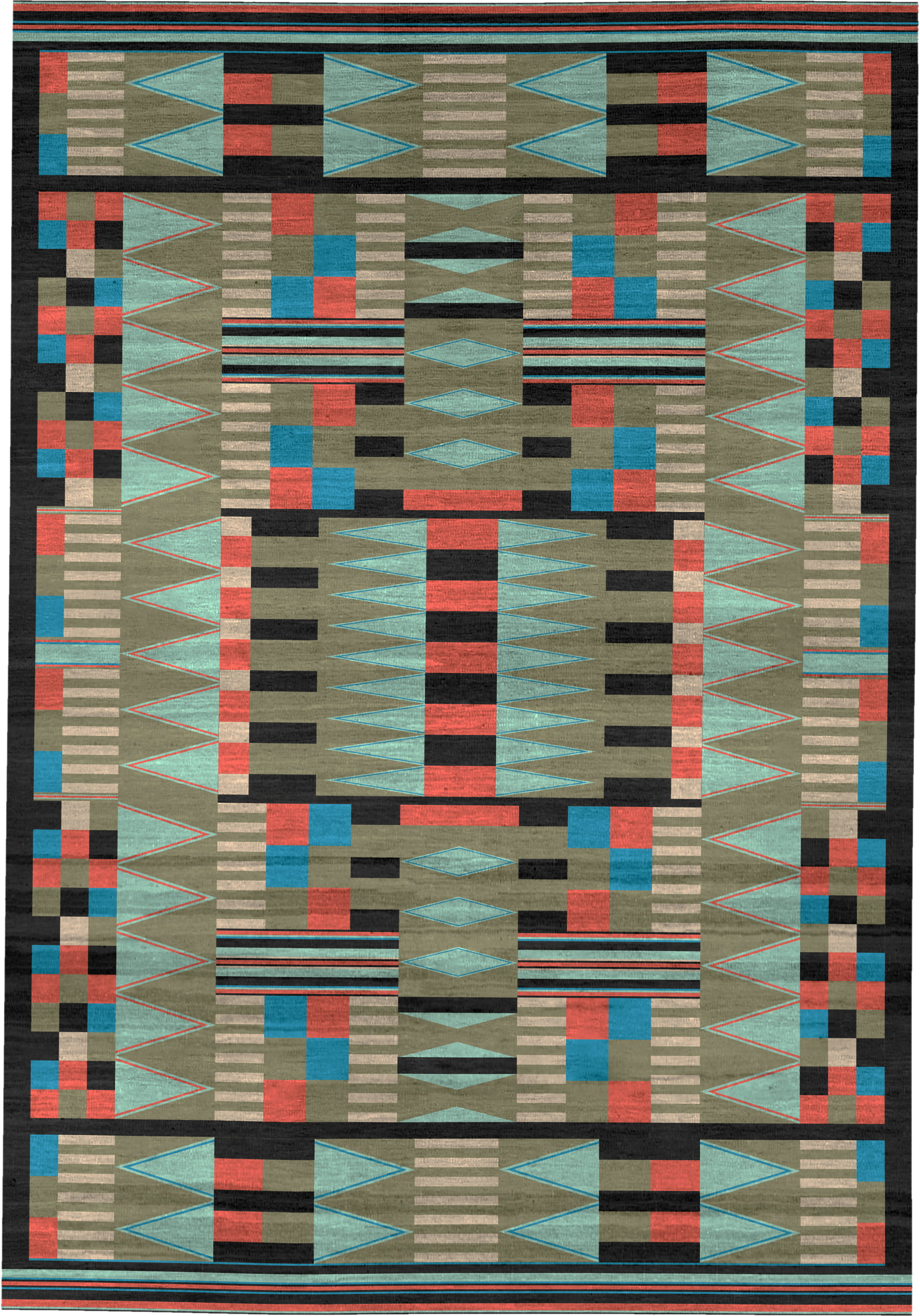
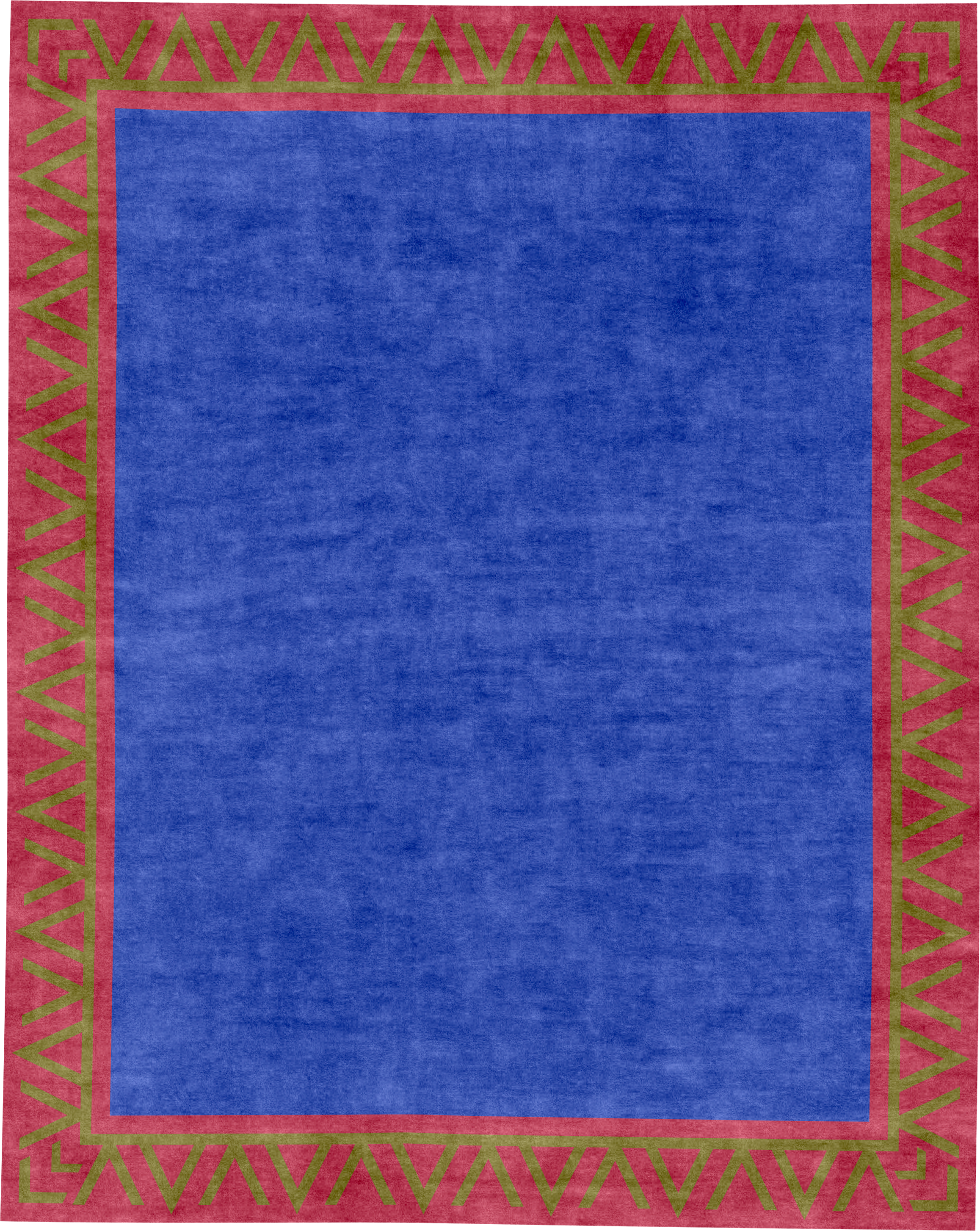
Photography left, Kisi Crocodil rug pattern. Right, Temoc.
What has been a continual inspiration throughout your career?
Visual beauty. By that I mean everything we look at and find pretty or interesting: art, colour, photography, nature, architecture, different cultures.
Each phase of my life had its own source, fashion first, then art, then interior design. What runs under all of them is looking itself. Lately it comes through as decorative arts, architectural detail, museum archives, the patterns you find in an ordinary day, and the close observation of plants. Different things reach me at different times and I never stop looking.
You built the studio’s base in Barcelona after a career that moved through São Paulo and London. What does the city’s own craft and design culture, its ateliers and material traditions, give you day to day, beyond simply being where the studio happens to sit?
Barcelona is considerably smaller than São Paulo or London, and that changes everything day to day. It is a city you cross on foot, and it is full of makers. You walk past ateliers and studios, you can put your head in and actually talk to the person working, and people here are open in a way that makes that easy.
The city itself is also a material education. The Catalan modernisme is everywhere, the ironwork, the organic shapes, the hydraulic floor tiles you find in an ordinary entrance hall. There are shops I have come to love, like Raima, the enormous old stationery store, and places like Studio 46, an artists’ space with a real sense of community, welcoming people, exhibitions and events every so often. You go for the work and stay for the atmosphere. Living inside that, rather than visiting it, is what Barcelona gives me.
Travel is often a source of creative renewal. Are there destinations you consistently return to, or recent discoveries you would recommend to readers seeking culture, design and atmosphere
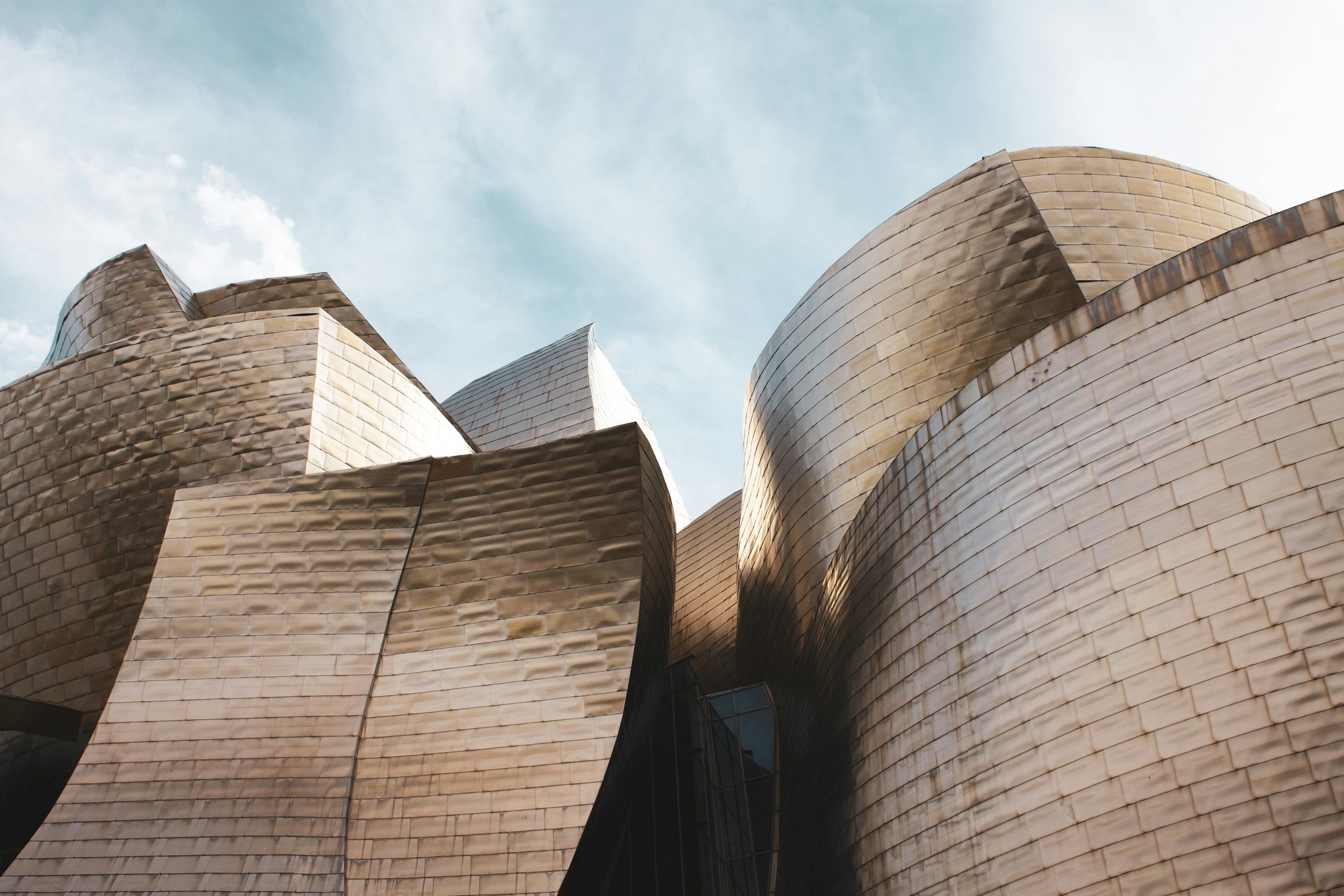
Photography, Guggenheim, Bilbao.
I am very drawn to museums. Wherever I go, even to a small city, I look for the local museum. Sometimes those are the interesting ones. A furniture museum, a fashion collection, something you would not have gone out of your way for. I find patterns everywhere, in the collections, the floors, the architecture, and it feeds straight back into my work.
I tend to return to the classic ones. In London I have a small ritual of going to the Royal Academy Summer Exhibition, because it is always varied and unexpected. I love the V&A for its decorative arts. Chillida Leku and the Guggenheim in the Basque Country have a stunning scale and atmosphere. And since moving to Barcelona I barely need to leave the street, there is so much to notice just walking by, sometimes sneaking into a building for a quick closer look when something catches my eye. The Museu Tàpies is another favourite for its library, where you book a slot and can spend hours with their art books.
If I were recommending anything to a reader, it would be less a list and more an approach. Do a bit of digging when you arrive. The old building, the café with a striking interior you would never have found without looking. Those are usually the things you remember.
Beyond travel, are there restaurants, cafés or cocktail bars whose atmosphere, materiality or sense of style you find especially compelling, spaces you return to again and again?
I do love beautifully styled spaces, but the ones I return to are the ones that make me feel at home. In Barcelona I keep going back to a few small places. Quimet & Quimet in Poble-sec is very charming, a standing room with shelves full of bottles, and the tapas are some of the best I have had. There is also a Brazilian place called Buriti in Poblenou that feels like you are visiting family.
What keeps me going back is the warmth. You notice the regulars, the friendly faces each time. It makes me feel great being part of that world.
What would you like to see more of in textile design right now?
I would like to see rugs treated as more than floor coverings. Designers commissioning rug techniques into furniture and objects: headboards, chairs upholstered in different weaves, ottomans, room dividers, large contemporary wall tapestries.
When you bring a handmade textile into an object like that, it adds a whole other layer, the texture, the craft, the extra sense that a hand made it. There is a lot of room to explore there, and I would love to see more of it. Furniture designers are very welcome to grab me for a chat about a potential collaboration.
And finally, what would you like to see less of?
Flatness. Fewer plain, handloom rugs that rest on a nice colour and nothing else. If a rug has no visible technique, no knot, no texture you can read with your eye or feel underfoot, then most of the meaningful decisions have been skipped. What I miss most is attention to the yarn. A mill-spun, flat yarn on a plain rug tells me nobody thought much about the material. Hand-spun yarn has variation, a slight irregularity that a machine takes out. Those small things are where you can see that someone actually decided how they wanted the rug to look, instead of just making a surface. So, less plain surfaces. More intention.
DISCOVER FLUXX HOME, PROPERTY & INTERIOR INSPIRATION