In Conversation With: Haya Jarrar, Romani home
Fashion trained her eye. Furniture is where she's putting it to work.
Haya Jarrar has never seen fashion and furniture as separate disciplines, so much as separate moods. The Dubai-based designer, who trained at the London College of Fashion and Condé Nast College before founding Romani in 2018, has spent the past two years extending that same instinct for movement and mood into collectible design. This month, her second act arrives fully formed: Romani Home debuts its first sculptural collection at 14A Hay Hill in Mayfair for London Design Festival 2026, running 12 to 20 September.
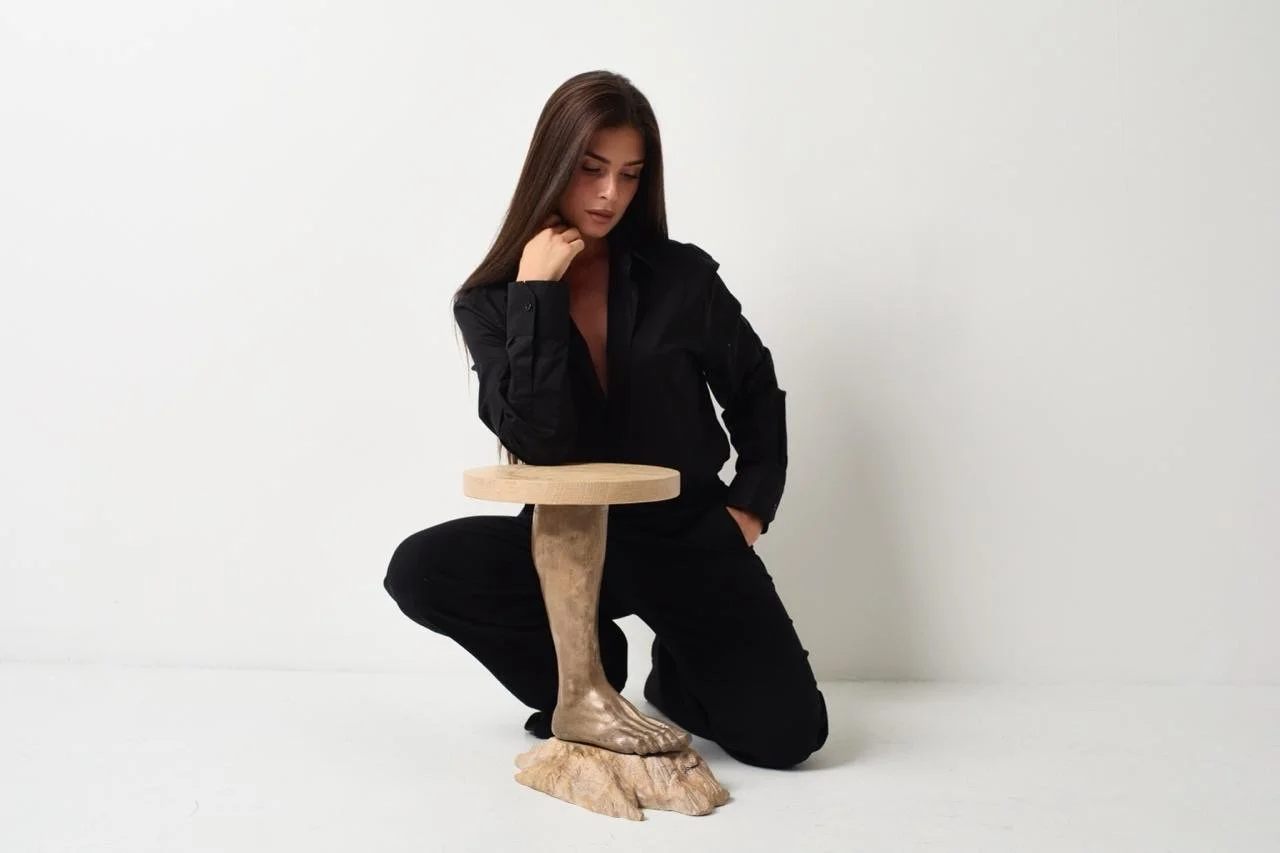
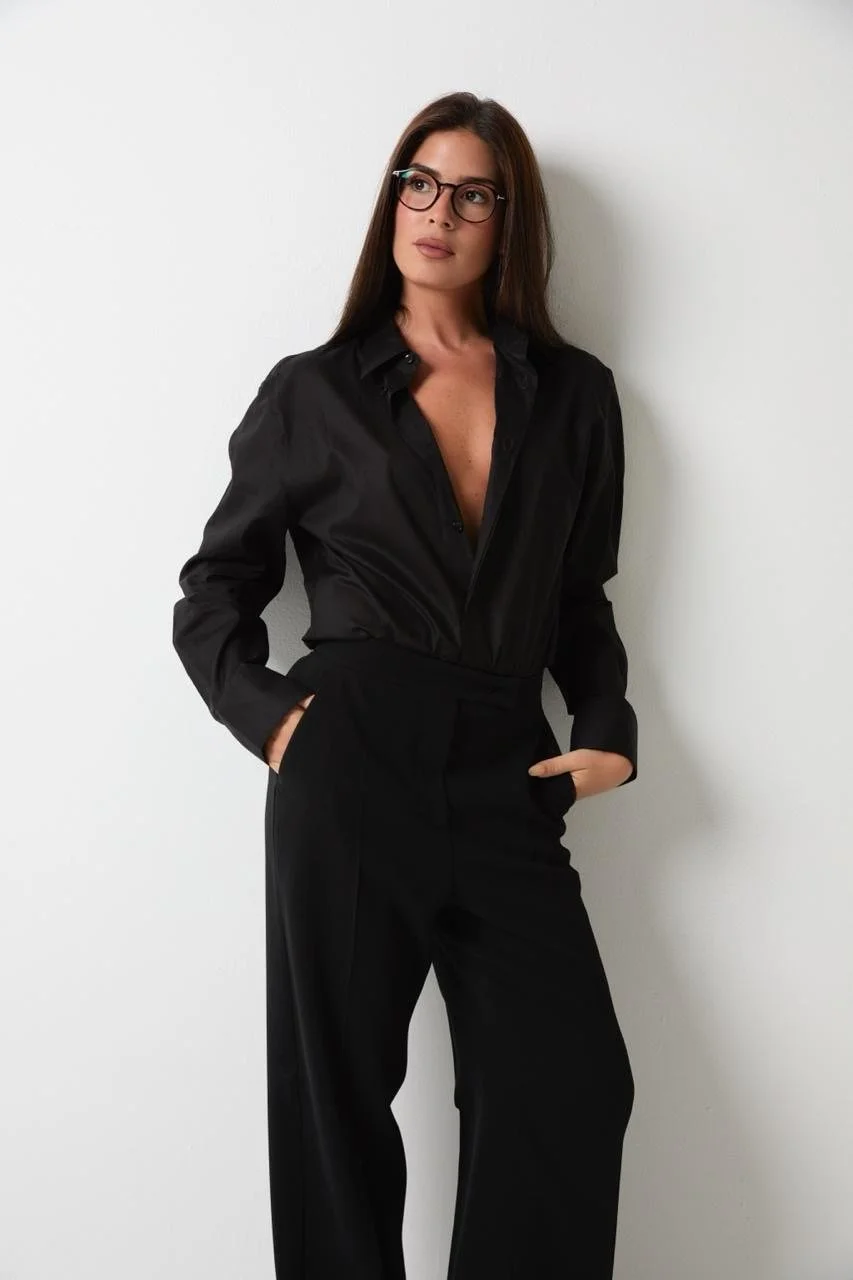
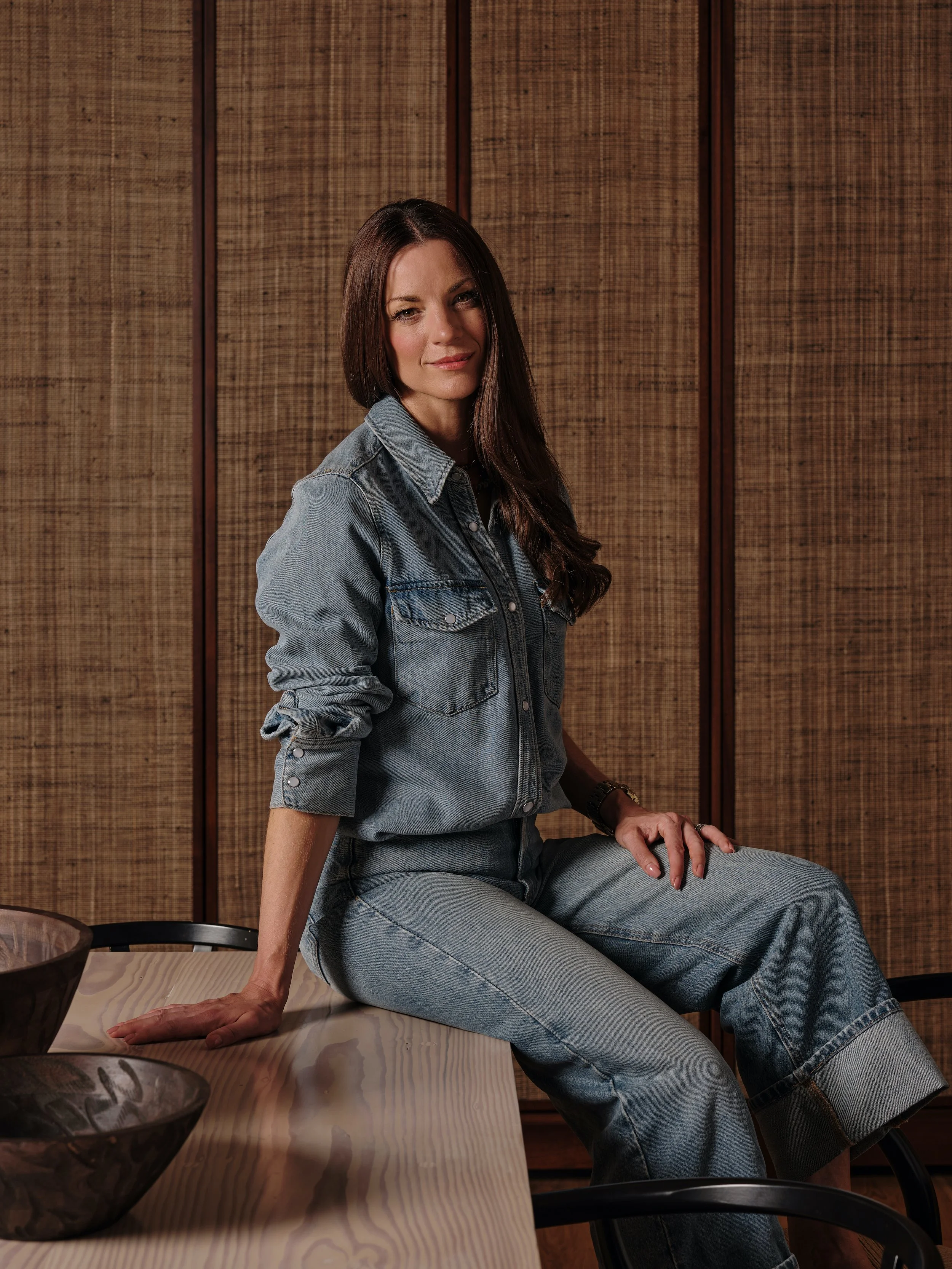
Designer, Haya Jarrar.
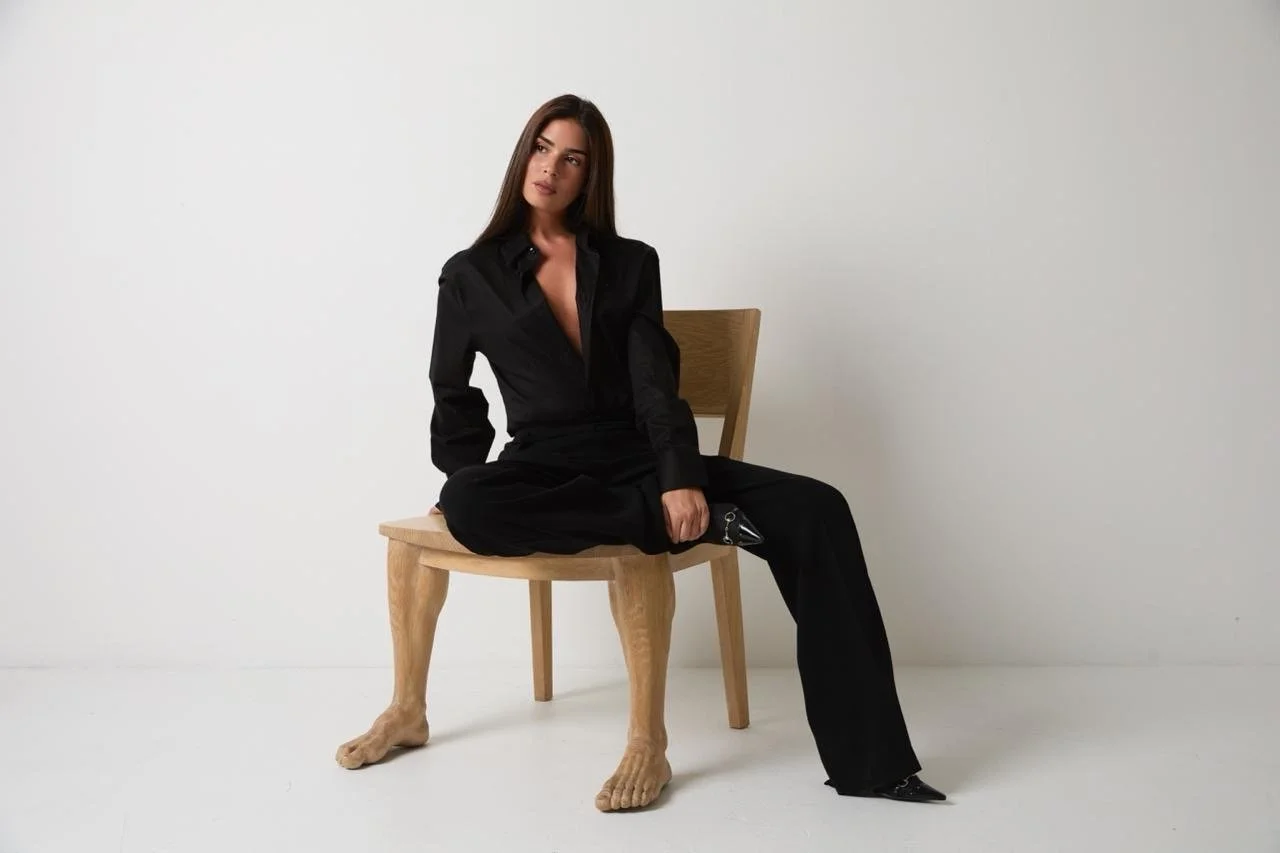
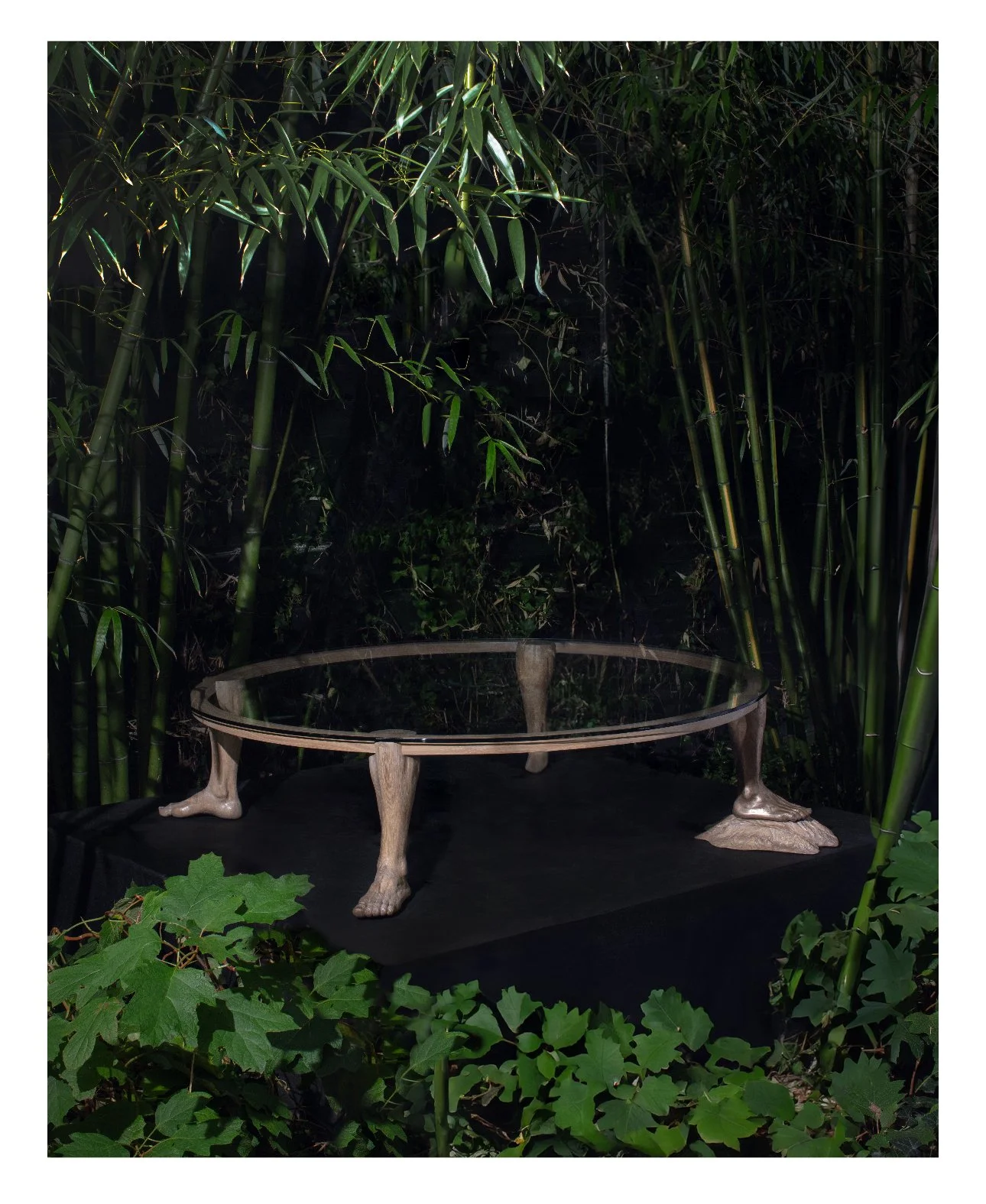
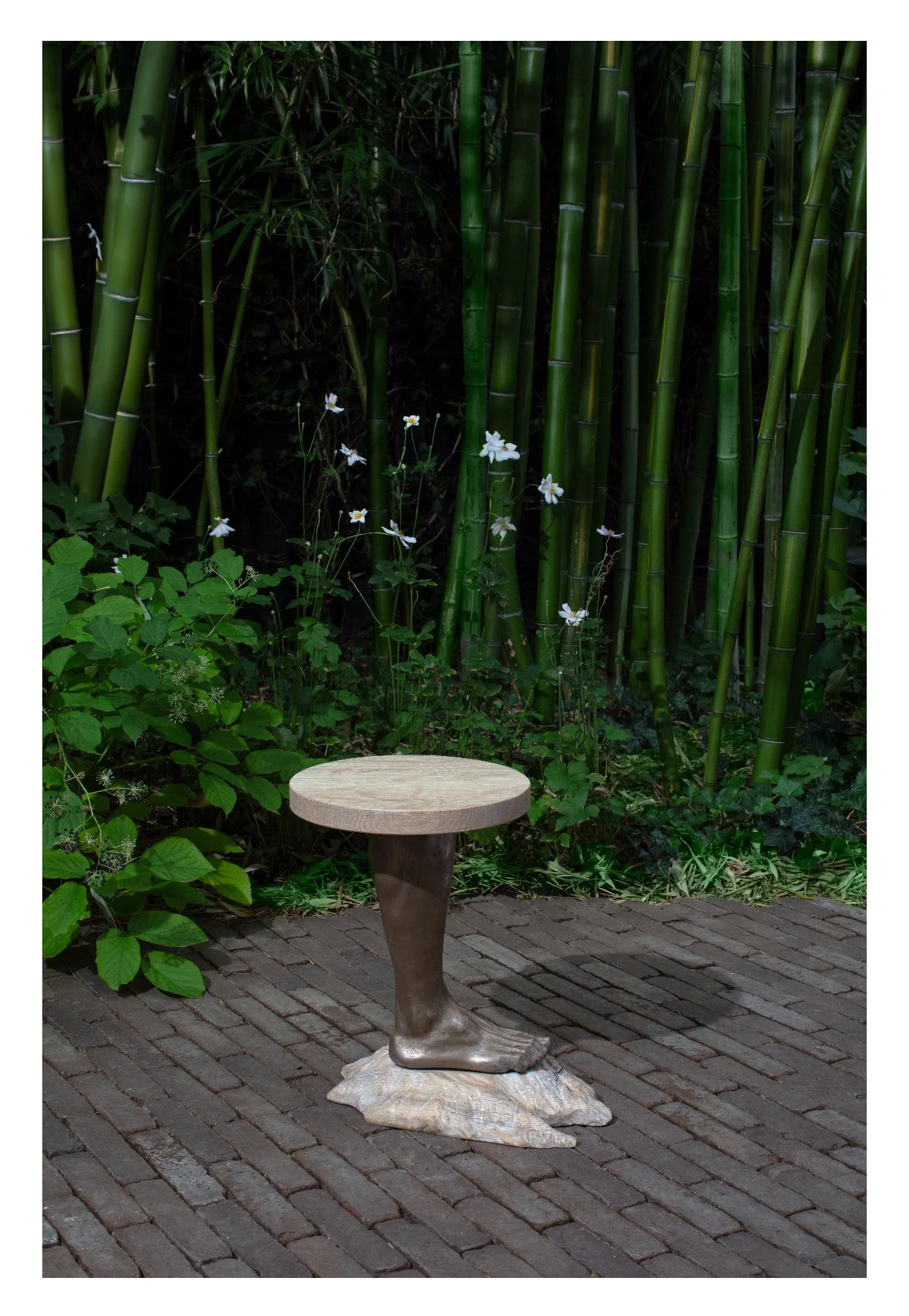
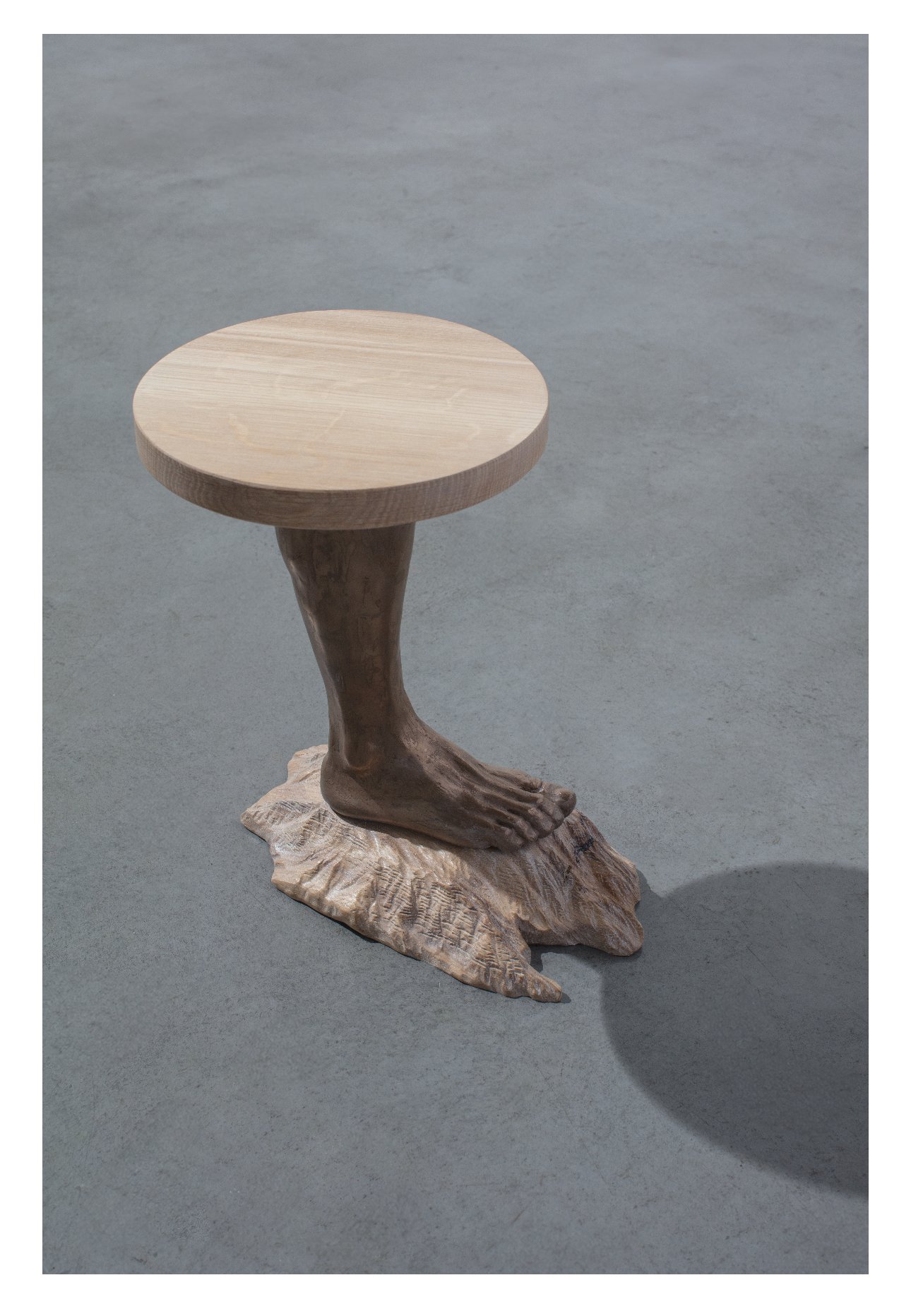
The collection is Jarrar's most personal yet. Modelled on the shape of her husband's feet, seen from the vantage point of his embrace in the months after the birth of their daughter, the pieces translate a private, tender moment into permanent form: less a literal likeness than a study in closeness, weight and memory. It is a fitting subject for a designer who has always worked from feeling rather than formula, and who insists there is no single visual signature running through her work, only a consistent nerve for risk.
Ahead of her London debut, Jarrar spoke to THE FLUXX about building two creative practices in parallel, what Dubai gives her as a base, and why a body of work born in the vulnerability of new motherhood needed London, the city where she became a mother, as its stage.
You studied at the London College of Fashion and Condé Nast College before launching Romani in 2018, what pulled you toward fashion first, ahead of interiors?
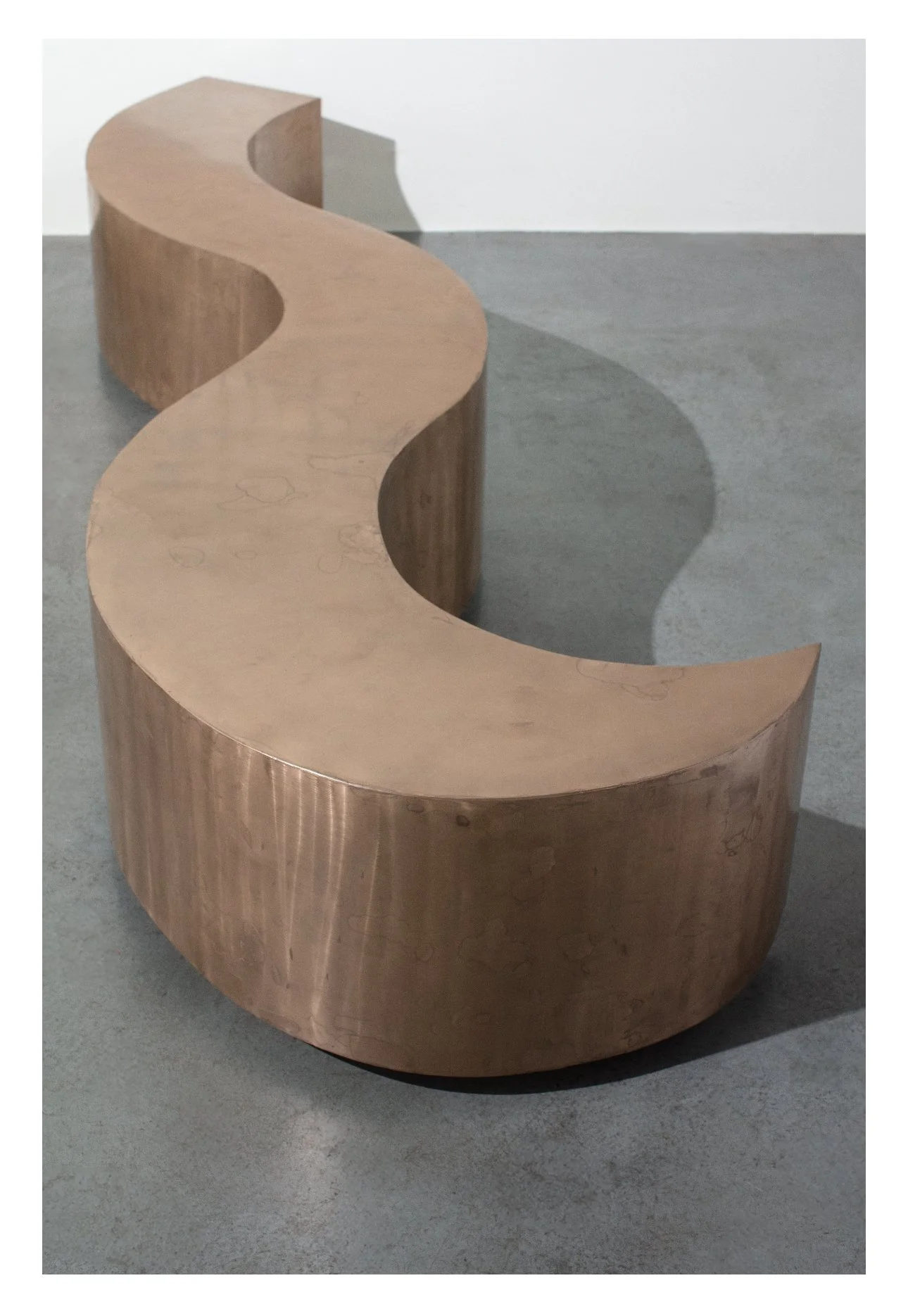
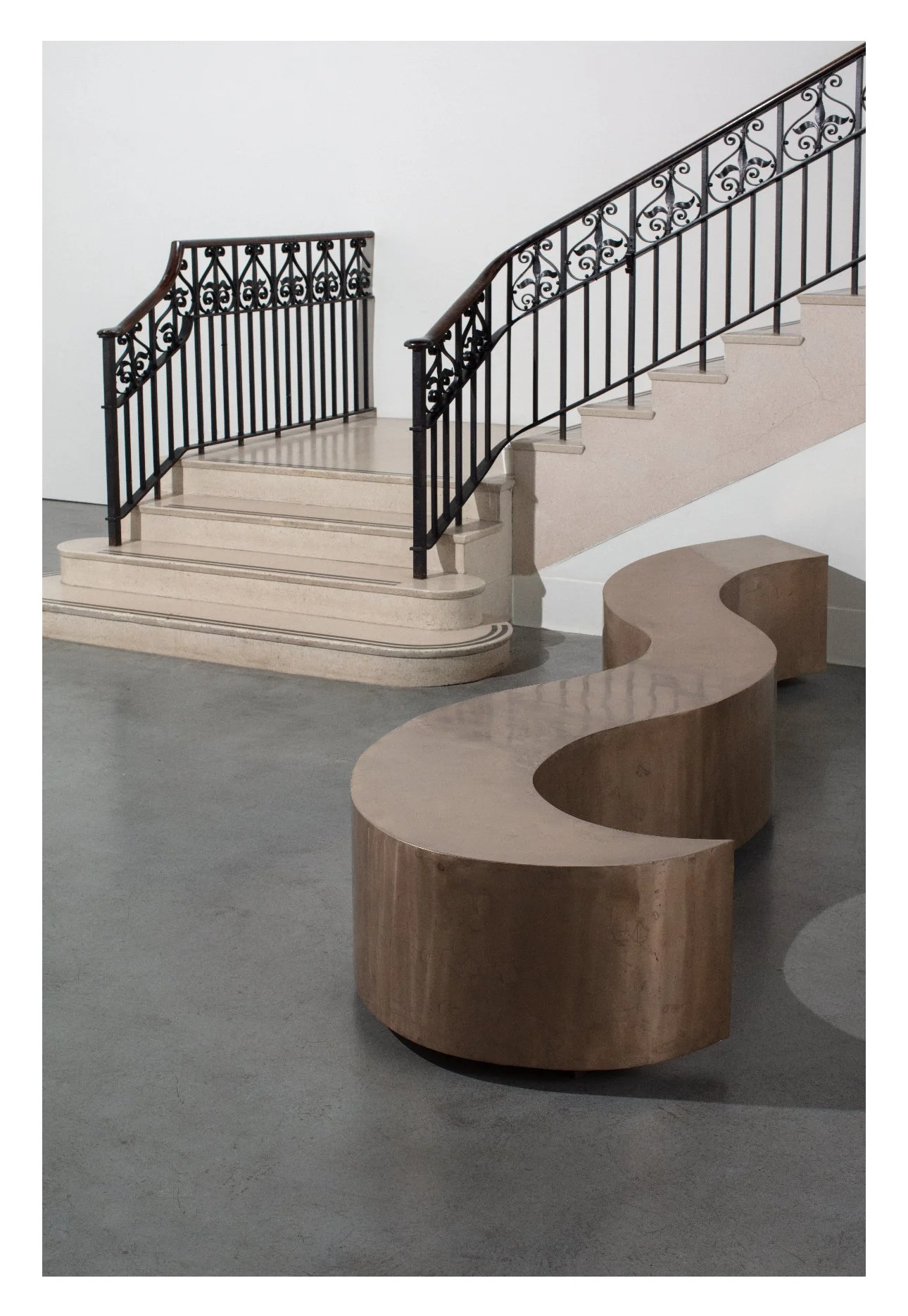
It wasn't necessarily one specific thing that pulled me towards fashion first. I think I simply followed what I felt ready for at the time. Fashion naturally paved the way for me.
Looking back, I'm happy it happened in that order. Building Romani through fashion taught me so much about the business of design, while also allowing my creativity and confidence as a designer to evolve along the way.
Furniture came at a much more personal moment in my life. It began with my first home, which I really consider my first interiors project. Designing that space gave me a reason to explore furniture in a way that felt instinctive and meaningful, rather than simply launching another category. It felt like the right moment for that side of my work to exist.
You've lived across London, Amman and Dubai. What does Dubai specifically give you as a base for a growing design practice?
Dubai gives me a sense of possibility. It's an incredibly international city, so you're constantly surrounded by different cultures, perspectives and ways of living, and I think that naturally feeds into the way you design.
There's also an openness here to new ideas. People are curious, ambitious and willing to embrace things that feel different, which gives you a certain freedom as a designer. I don't feel that I must define myself by one discipline or stay within one particular world.
For me, Dubai has become a place where I can grow Romani beyond fashion and explore furniture, objects, art and interiors while still being connected to an international audience. There's an energy here that makes you feel like things are possible, and creatively, I find that very exciting.
How does designing a chair, a sculpture or a collectible object differ from designing a garment, in terms of process, material, and how a piece is meant to be lived with?
To begin with, almost everything is different. They are both forms of creative expression, but a garment is designed to live on the body, whereas a chair, sculpture or collectible object is experienced in an entirely different way.
The process and the relationship with materials are also very different. With fashion, you're thinking about how a fabric moves, how it feels against the body and how it changes when it's worn. With furniture and objects, I think much more about permanence, texture, weight, proportion, and how that material will feel within a space over time.
A garment eventually goes back into your wardrobe. A piece of furniture remains in your line of sight; you live with it and see it every single day. I think that creates a different kind of responsibility as a designer. I want the pieces I create for a home to have enough presence to be noticed, but enough depth that you don't become tired of looking at them. They become part of your environment and, eventually, part of the way you remember a space.
Looking back at your collections to date, is there a common thread, a material, a shape, a feeling, that runs through everything you've made, whether wearable or sculptural?
I feel like fashion and furniture come from two completely different sides of my mind. The way I like to dress is very different from the way I would furnish a home, and I find that contrast interesting.
The common thread isn't necessarily a particular material, shape or aesthetic; it's more in my approach. I'm quite daring in both. I'm not afraid of something having a strong presence, whether it's a garment, a piece of furniture or even the art I choose to collect. My taste in art has that same instinct, but it expresses itself in a completely different way again.
I think we sometimes assume that a designer has to have one very obvious visual DNA running through everything they touch. I don't necessarily believe that. You can have different ways of thinking and creating across different disciplines while still having the same instinct behind them. For me, that instinct, being bold, taking risks and choosing things that provoke a feeling, is probably the real thread connecting everything I do.
This new collection is modelled on your husband's feet, from the view you had sitting in his embrace after becoming a mother. How do you translate something that intimate into physical, sculptural form?


That's how I work most of the time. I'm an extremely emotional person, and so much of what I design comes directly from an emotion, a memory or a very specific moment in my life. I naturally connect those feelings to objects.
When I wanted to translate that experience into design, that image was the first thing that came to mind. It was such a personal and intimate perspective but turning it into an object felt completely natural to me. There has always been a certain weirdness in my work and in the way I approach a space or a piece of furniture. I'm drawn to things that are a little unexpected or even strange, especially when there is something very human behind them. So taking something as intimate and familiar as that view and turning it into a sculptural form felt very much like me.
Becoming a mother for the first time last year clearly reshaped this body of work. How has motherhood changed the way you think about design, materials, or even time itself in the studio?
Motherhood has changed my perspective more than it has changed my aesthetic. I think I notice things differently now. Small moments that I might not have thought twice about before suddenly carry so much more meaning, and this collection is probably the clearest example of that.
It has also completely changed my relationship with time. My time in the studio is much more precious now, so I've become more instinctive and decisive.
Becoming a mother has also made me think differently about permanence. Fashion can capture a particular moment, but with furniture and collectible design, I'm creating objects that can live with you for years, potentially even generations. There's something about motherhood that makes you think more about what you leave behind, and I think, without consciously intending it, that has found its way into my work.
Why was London Design Festival, and specifically Mayfair's 14A Hay Hill, the right stage for a collection this personal to make its debut?
It just felt like the right time and, more importantly, the right place. London has always been a second home to me and has played such an important role in my life, both creatively and personally.
It's where I studied and where so much of my journey as a designer began, but it's also where I became a mother. I spent most of my pregnancy there, gave birth there, and experienced those first months of postpartum there, such an intimate and vulnerable chapter of my life.
Because this collection was born from that same period, bringing it back to London for its debut felt almost like bringing the story full circle. London Design Festival gave me the opportunity to introduce something so personal within a wider conversation around contemporary design, while Mayfair felt like the right setting for work that sits somewhere between furniture, sculpture and collectible art.
In a way, I don't think I could have imagined this collection making its debut anywhere else.
Beyond Gabriella Crespi, whose work in fashion, art, or design, do you keep returning to for inspiration?
I don't think there's one particular person or body of work that I continuously return to. Of course, there are designers like Gabriella Crespi whose work I deeply admire, but my inspiration tends to come from everywhere and often when I'm not looking for it.
I travel a lot, I see a lot, and I'm constantly absorbing things. It could be a painting I come across, a song, a building, a material, a landscape, or even a person I meet and the way they see the world. Sometimes it's something incredibly small that stays in my mind and resurfaces much later in a completely different form.
For me, inspiration is much more about being exposed to different places, people and experiences than repeatedly looking back at one particular reference. I think that keeps my work instinctive and allows it to evolve with me.
Where do you see Romani House in five years, still rooted in collectible, limited pieces, or moving toward something more scalable?
For now, I know that I want Romani House to remain rooted in collectible, limited pieces. I want to create collections when I genuinely feel there is something worth creating, pieces that make sense to me personally and creatively, rather than producing simply for the sake of growth or scale.
But five years is a long time, and I'm also very open to what might come my way. There could be an opportunity that completely changes my perspective and makes me want to explore something more scalable, or I may feel even more strongly about keeping things limited and collectible.
I've actually learned, especially since becoming a mother, not to plan too far ahead. Life can change so quickly, and I've become much more comfortable allowing things to evolve naturally rather than trying to control exactly where I'll be in five years. I know what feels right to me now, and I trust that whatever comes next will reveal itself at the right time.
After London, where next? Is there a city or region you're especially keen to bring your work to?
I might have to keep that one a surprise for now. There is one place I've had in mind for a very long time, somewhere I've always imagined showcasing my work, and it's something I'm currently working towards.
What draws me to it is how personally connected I feel to the place. There's so much of my identity in it, and I think bringing the collection there would tell another side of my story in a way that feels very natural. I can't say too much just yet, but hopefully it's something I'll be able to reveal very soon.
Travel is often a source of creative renewal. Are there destinations you consistently return to, or recent discoveries you'd recommend to readers seeking culture, design and atmosphere?
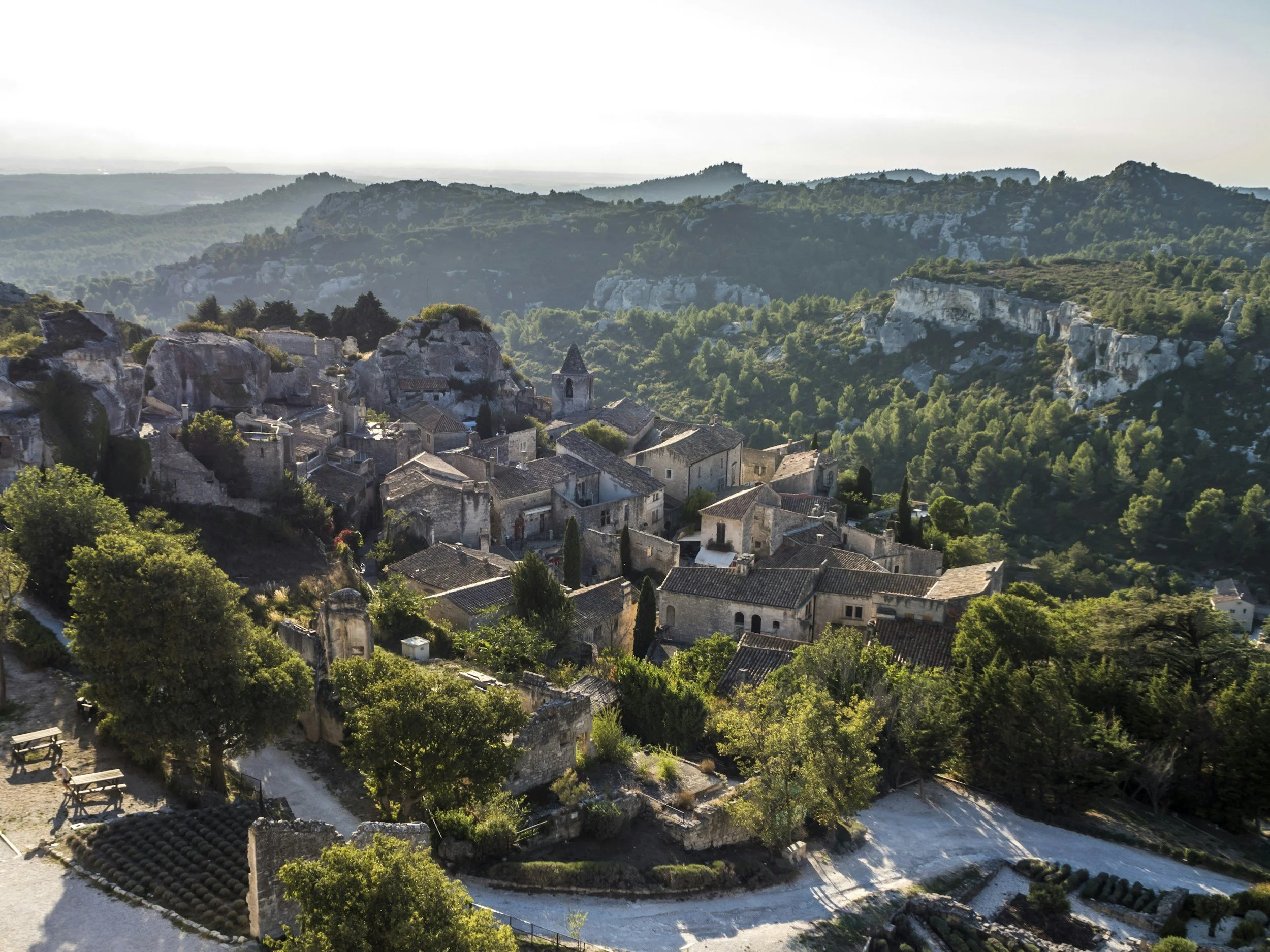
Photography, Provence France.
I find myself returning to France and Italy more than anywhere else, both in winter and summer, and occasionally Spain. What I love is that no matter how many times I go back, I always seem to discover something new that resonates with me.
The South of France in particular is somewhere I can return to again and again. There's such an incredible intersection of art, food, architecture and landscape. I love discovering vineyards and old estates, but also some of the lesser-known artist residences and creative spaces that you almost have to seek out. Those are usually the places that stay with me the most.
I think that's how I like to travel in general. Even somewhere I know very well, I'm always looking for what I haven't seen yet, a small gallery, an incredible meal, a beautiful house, a vineyard, or a space that isn't necessarily on everyone's list. For me, the inspiration is often in those discoveries rather than the destination itself.
What would you like to see more of in the design world?
I'd love to see more freedom and more real, raw emotion. I think the most interesting work happens when people stop thinking about what they should be designing and start creating from who they actually are. I want to see more personality, more instinct, more vulnerability, things that feel deeply personal rather than overly considered or perfected. For me, that's when design becomes really interesting.
DISCOVER MORE FLUXX INTERVIEWS