In Conversation With: Roselind Wilson
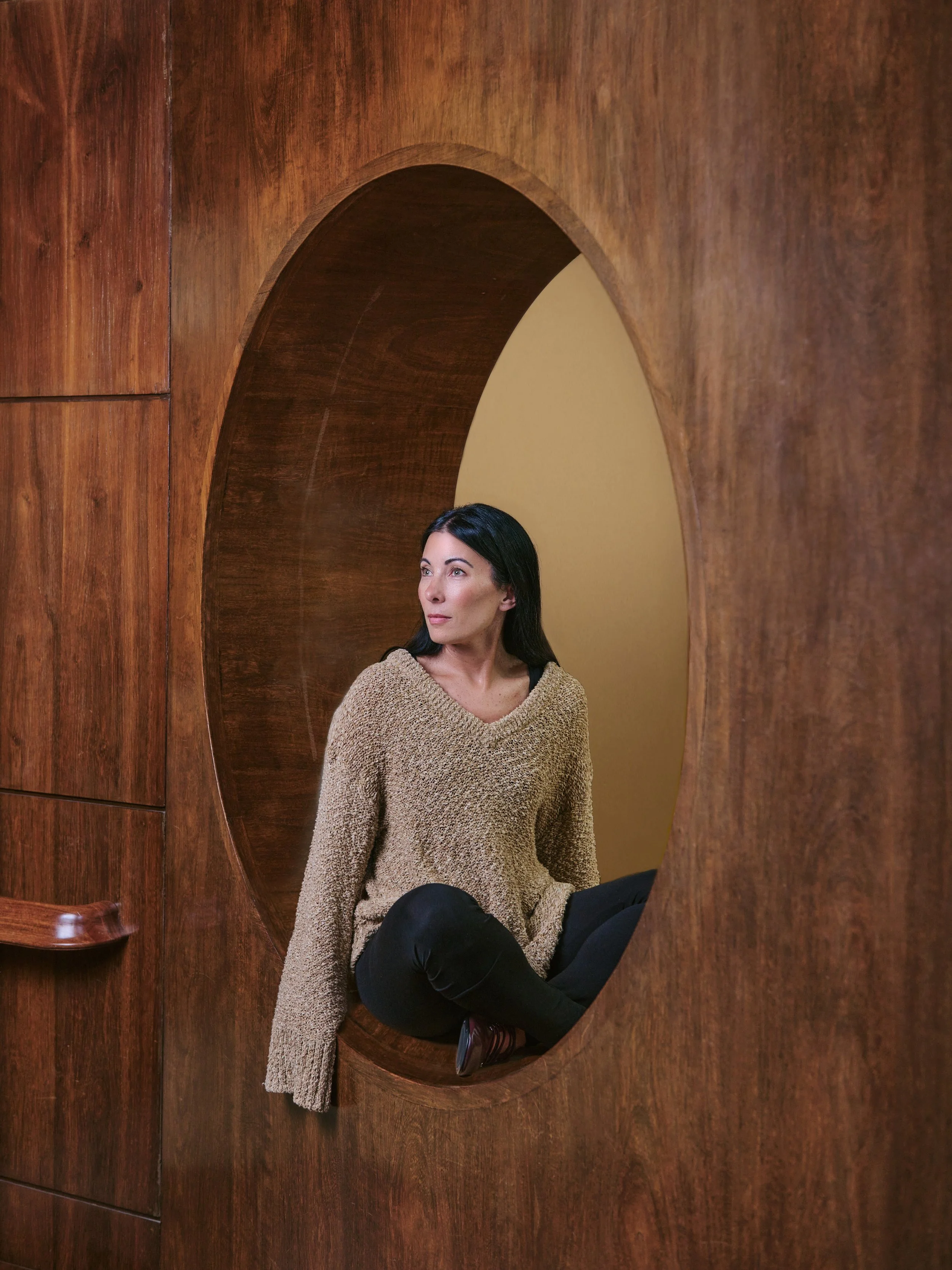
Photography, Designer & Company founder, Roselind Wilson, Jacquetta Clark.
Roselind Wilson has spent two decades shaping some of Britain's most quietly compelling interiors, from bold boutique hotel and VIP club transformations in Cape Town to the refined residential and hospitality projects that now define Roselind Wilson Design, her interior architecture and design studio based at The Mills Fabrica in London. Trained through influential years at David Collins Studio and Helen Green Design, Wilson brings a rare cross-cultural fluency to British interiors, filtering the strong lines, earthy tones and layered textures of South Africa through the period architecture and heritage sensibility of the UK.
The result is a studio recognised by Homes and Gardens, Livingetc, The Telegraph, English Home and Grand Designs for prime and heritage homes built on bespoke craftsmanship, honest materiality and an instinct for storytelling that resists trend for the sake of it. Wilson's interiors are, above all, personal, shaped by a belief that a home should reflect the nuance and rhythm of the life lived within it.
In this interview Wilson discusses the tension between British restraint and South African experimentation, the materials she is drawn to right now, why artificial intelligence is reshaping client confidence without replacing design literacy, and why she believes the interior design industry urgently needs to better value the people behind the work. She also shares the Sicilian rituals and the small, un-photographed moments in London and Japan that keep her creatively recharged.
In Conversation With: Roselind Wilson
Your career began with bold boutique hotel and VIP club transformations in Cape Town before you brought that energy to London. That South African influence, strong lines, intense earthy tones and layered textures, clearly remains part of the studio's DNA. Do you think British design culture gives clients enough permission to be experimental, or does the dominance of period architecture here naturally pull things toward the more restrained?
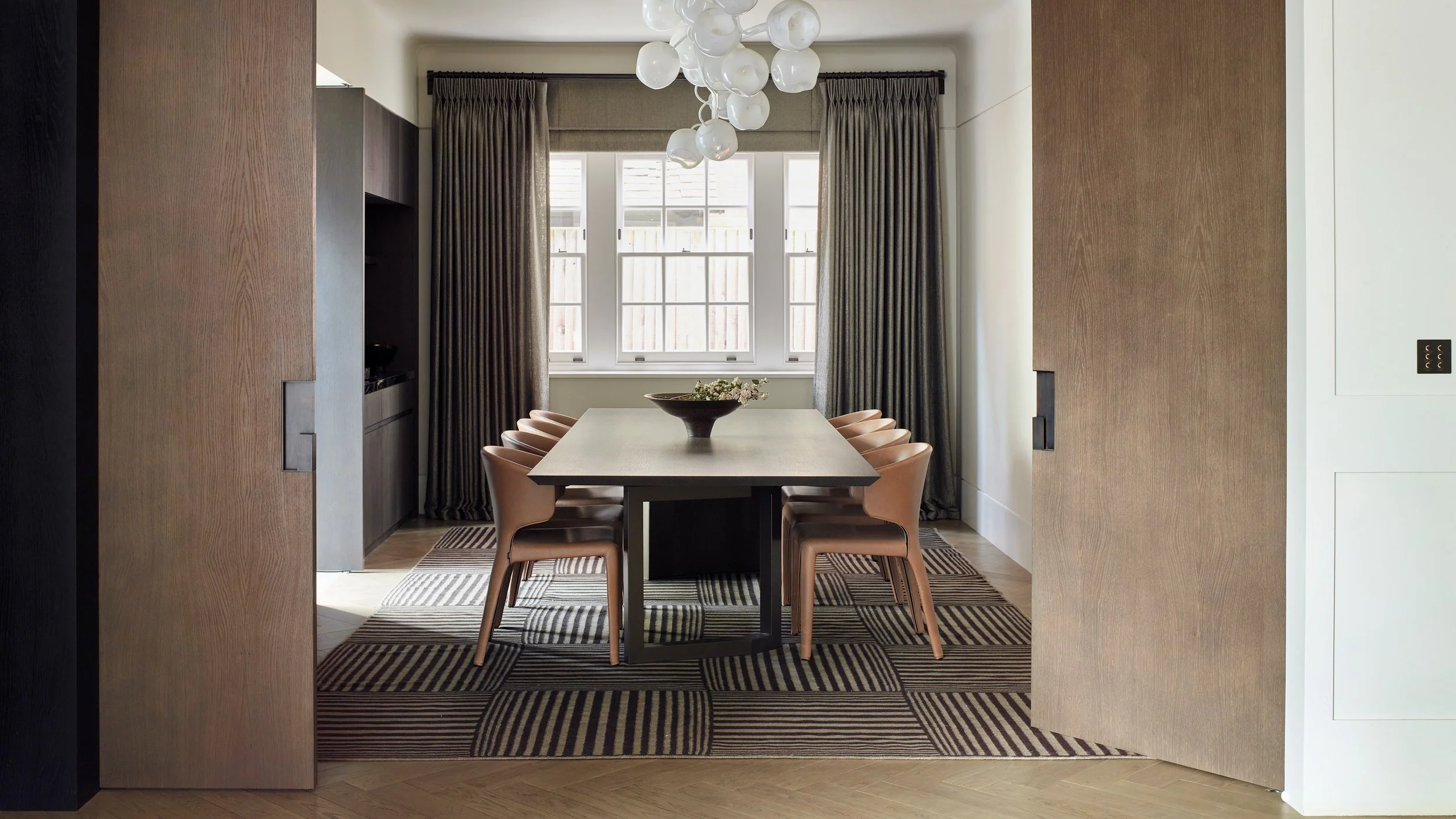
Photography, Hampstead Property, London. Roselind Wilson Interior Design, Mary Wadsworth.
I think cultural context is incredibly important. The UK is an old nation, built upon thousands of years of history. Layer upon layer of architecture, heritage and cultural memory have created an environment where preservation naturally matters. I think there's enormous value in that.
South Africa is very different. Rather than one dominant historical narrative, it's always been a meeting point of cultures and influences. In many ways, it's spent its history defining and redefining its own identity, and I think that naturally encourages a more experimental approach to creativity.
I don't see either approach as right or wrong. They're simply different responses to different cultural conditions. The UK is undoubtedly more reserved in its approach to design, but I think much of that restraint exists for good reason. It respects context and understands that architecture carries a responsibility beyond the present moment. What interests me is where those two worlds overlap.
British design has no shortage of creativity. There are extraordinary designers and makers here. Perhaps what I bring, having grown up in South Africa, is a willingness to push against those boundaries slightly. The most exciting work often happens in that space between the two, where expressive creativity meets historical context and architectural discipline. Period architecture may naturally pull things towards restraint, but I often think that's exactly what allows moments of contrast and individuality to have real impact.
Materials do so much of the emotional work in a space. What are you reaching for most now? Are there textures, finishes or combinations that feel particularly alive to you right now, and are there materials you feel the industry is overusing?
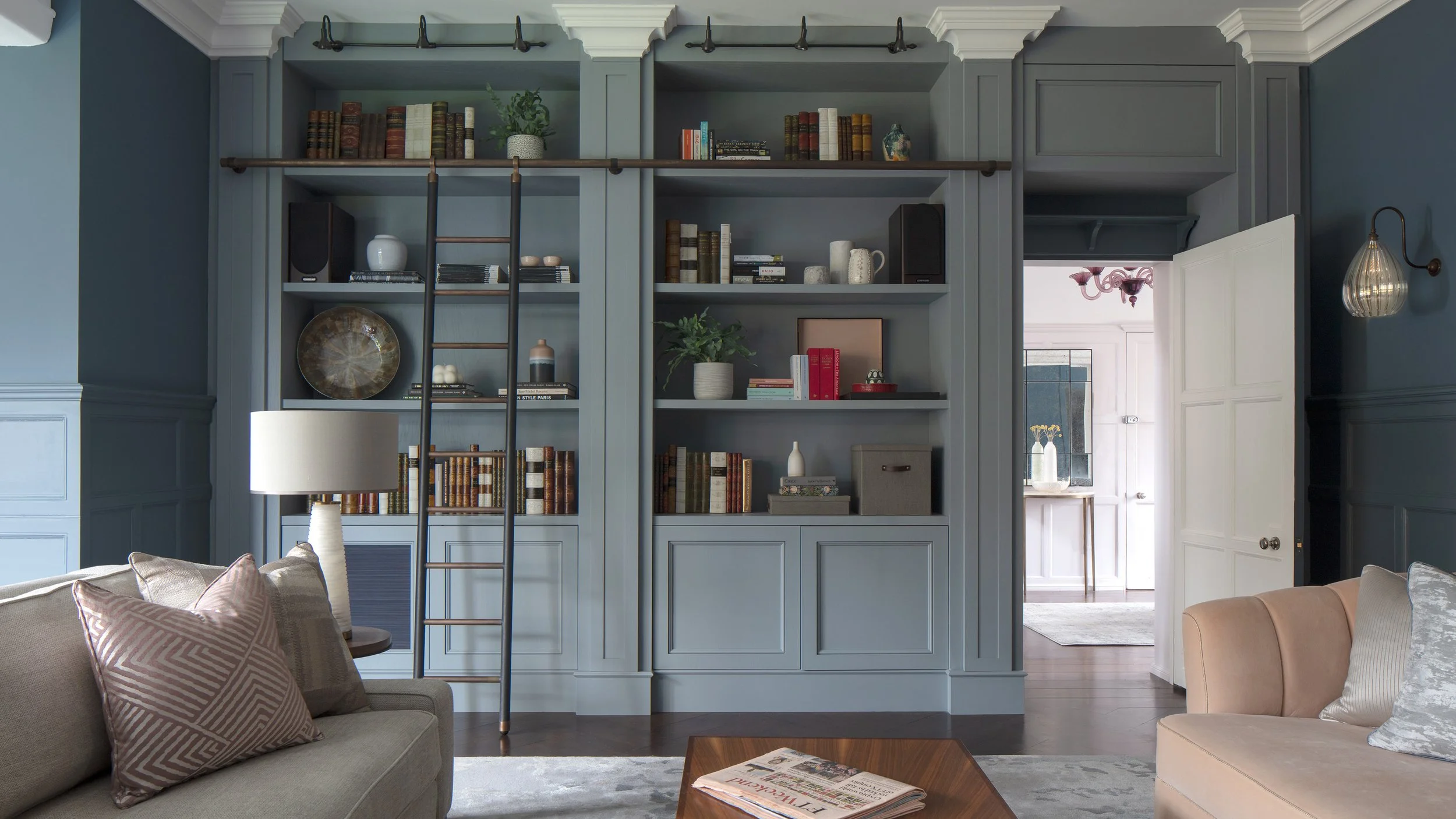
Photography, Roselind Wilson Design, Richard Waite.
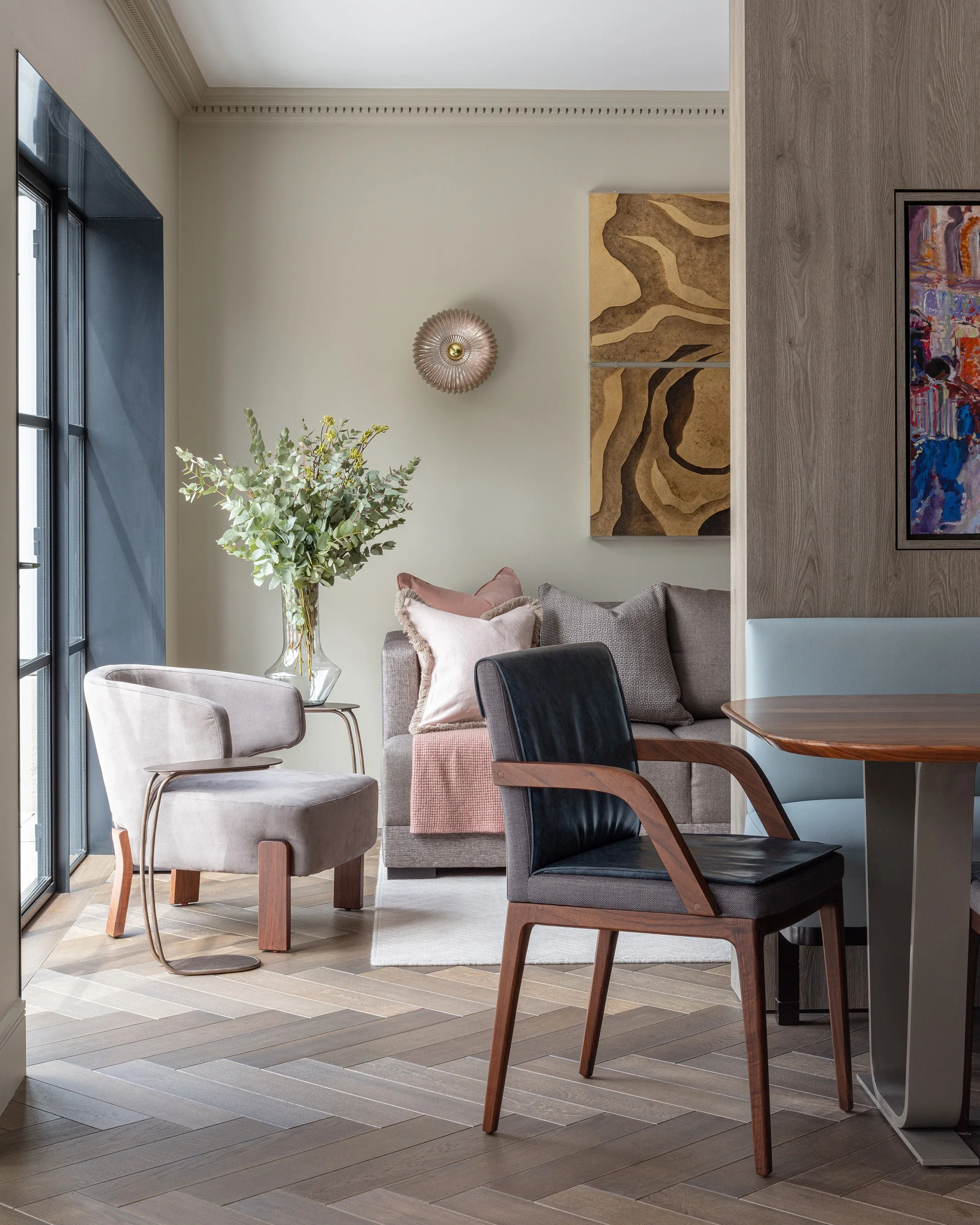
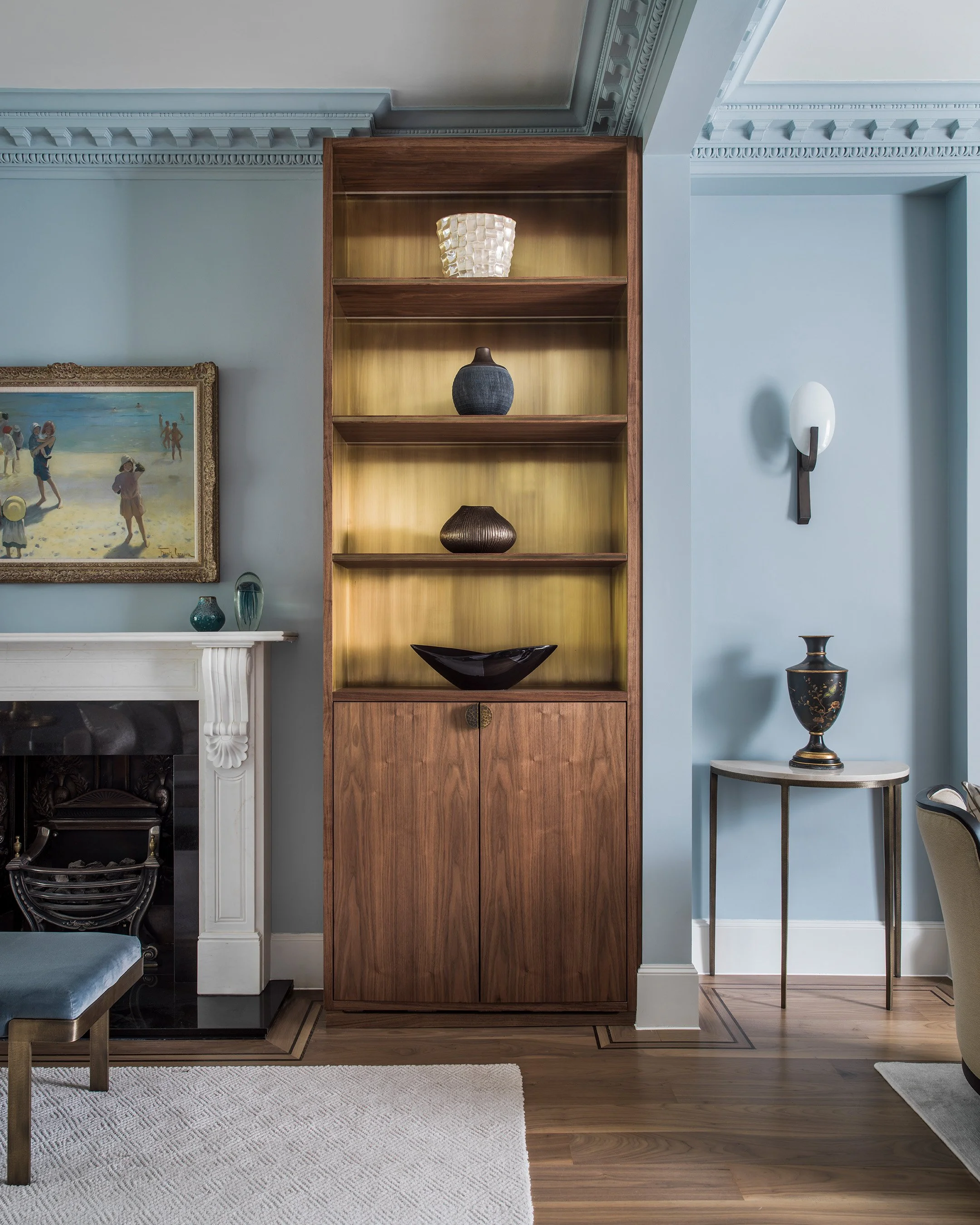
I don't think materials ever go out of fashion. What changes is the way we choose to see and use them. The idea of a material being overused is interesting because I'm not sure the material itself is ever the problem. Every material has an inherent beauty and purpose. What happens is that people stop appreciating the material for what it is and instead see only the trend surrounding it. Suddenly it's not about the qualities of the timber, it's about the fact that everybody wants that table they've seen everywhere.
For me, materials do so much of the emotional work within an interior. Wood carries warmth, texture, grain and age. Glass and mirror interact with light. Metal brings an entirely different quality and presence. Each material has its own character. Right now, wood feels particularly alive to me, there's something incredibly honest about it. I'm currently really into low build finishes that allow you to feel the grain rather than masking it, alongside reclaimed timbers that already carry a sense of history and character.
At the same time, I'm becoming increasingly interested in metal, which perhaps seems like the opposite instinct. Traditionally we think of it as quite industrial and hard, but I'm intrigued by the way it's being used in very restrained architectural details. What interests me is the tension between those two materials. The warmth and tactility of timber alongside the simplicity and precision of metal.
Ultimately, it's never really about the material. It's about understanding its qualities and using it in a way that feels authentic rather than fashionable.
You believe homes should reflect the nuance and rhythm of the lives within them. What are you seeing shift in how people want to live? What are clients asking for now that they weren't five years ago, and what lifestyle or design trends are quietly gathering momentum that you think will define the next few years?
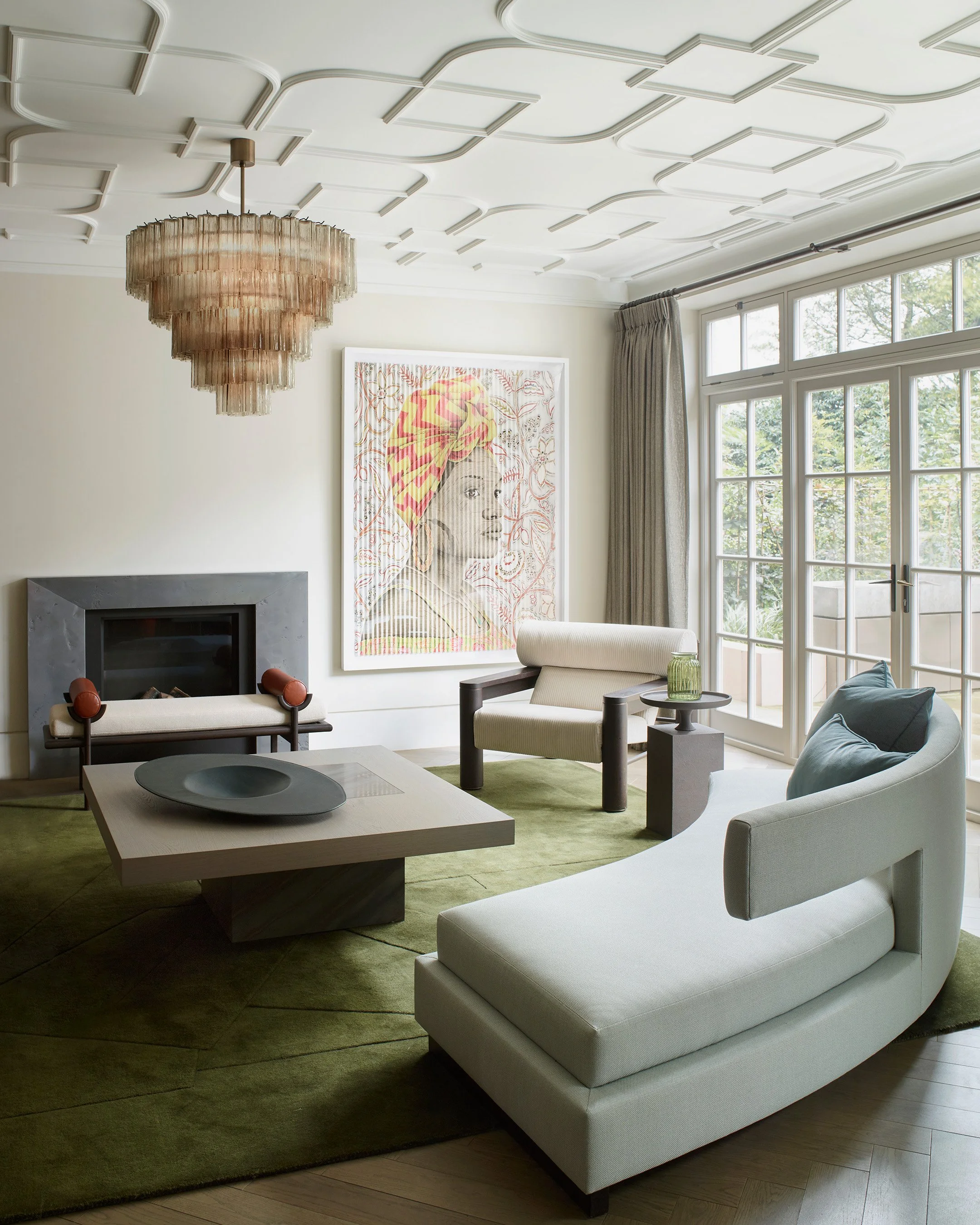
Photography, Roselind Wilson Design, Mary Wadsworth.
I think we're right on the cusp of a significant shift, which means it's probably too early to give a definitive answer. We still need a little more time to see how the scrambled egg settles.
Clients are becoming far more confident in expressing their creative identity. Technology, and particularly AI, has given people new ways to visualise and communicate what they like, so they arrive with a much clearer point of view than they would have five years ago. What's interesting is that confidence in expression isn't always the same thing as confidence in understanding. AI can generate beautiful rooms in seconds, but it can't teach you why something works or how those ideas translate into a real home. That's the equilibrium we're still working towards. Clients are no longer standing outside the design process looking in. They're stepping into the design matrix alongside us, and I think that's a positive development.
At the same time, we're seeing an interesting contradiction. As technology becomes more advanced, people seem to want their homes to become simpler. There's less appetite for complexity for complexity's sake and more desire for calm, intuitive spaces that simply work. The more complicated the world becomes; the more people seem to want clarity at home. I think that's the trend that will quietly define the next few years, and our role as designers is becoming less about presenting ideas and more about helping people shape all that inspiration into homes that genuinely work for the way they live.
Your work is known for a love of bespoke craftsmanship and the layering of materials in ways that feel both contemporary and enduring. Are there makers, artisans or creative collaborators whose work you are currently drawn to?
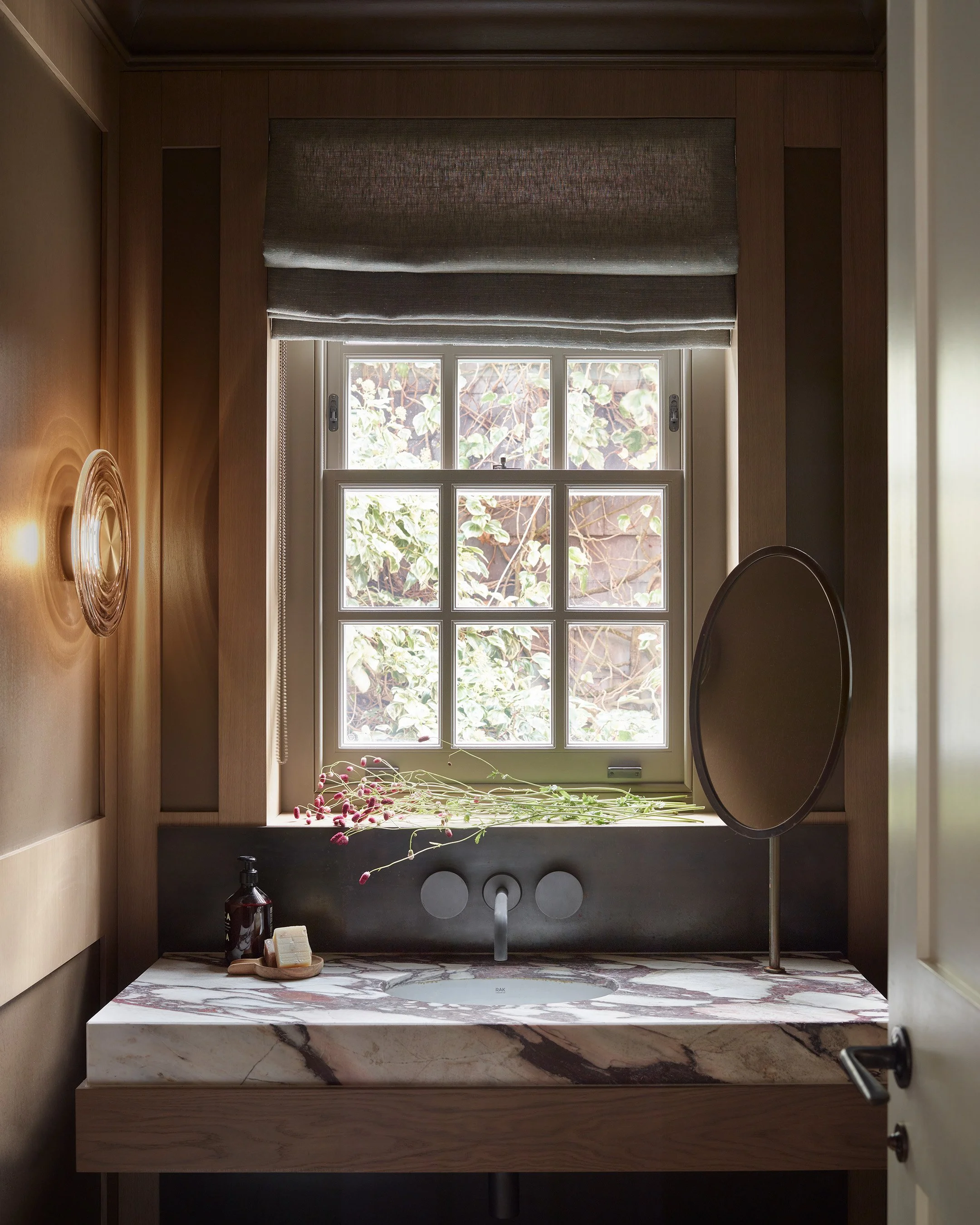
Photography, Roselind Wilson Design, Mary Wadsworth.
Twenty years ago, when I was starting out in the industry, we were very much inspired by individual craftsmen and makers. When I worked at David Collins and later Helen Green Design, there were names we all followed. In America, designers like Barbara Barry and Thomas Pheasant. Here in London, people like Tom Faulkner, Rupert Bevan and Bill Amberg. They belonged to a generation that lived and breathed their craft. They made things with their hands, understood materials instinctively and built businesses around that expertise.
Today, the landscape is very different. Technology has transformed the creative process, and many makers are working with digital modelling, CNC fabrication and increasingly AI. It's still hugely creative, just in a different way. What interests me isn't choosing one over the other, it's the space between those two worlds.
I realised that quite recently, while spending an afternoon in the photography section of a bookshop. I found myself completely absorbed, fascinated by the photographer's eye. The ability to observe, compose and capture something emotionally resonant is still a deeply human creative skill, even though the medium itself continues to evolve through technology.
Perhaps that's why it resonates with me at this stage in my career. I have enormous respect for traditional craftsmanship, but I'm equally fascinated by the possibilities that new technology presents. Increasingly, it's that intersection between the two that I find most inspiring.
Art can anchor a room or completely transform it. How central is art to your process? Do you bring it in early as part of the concept, or does it arrive later to respond to what's already there? And how do you help clients who perhaps haven't collected before start to develop that instinct?
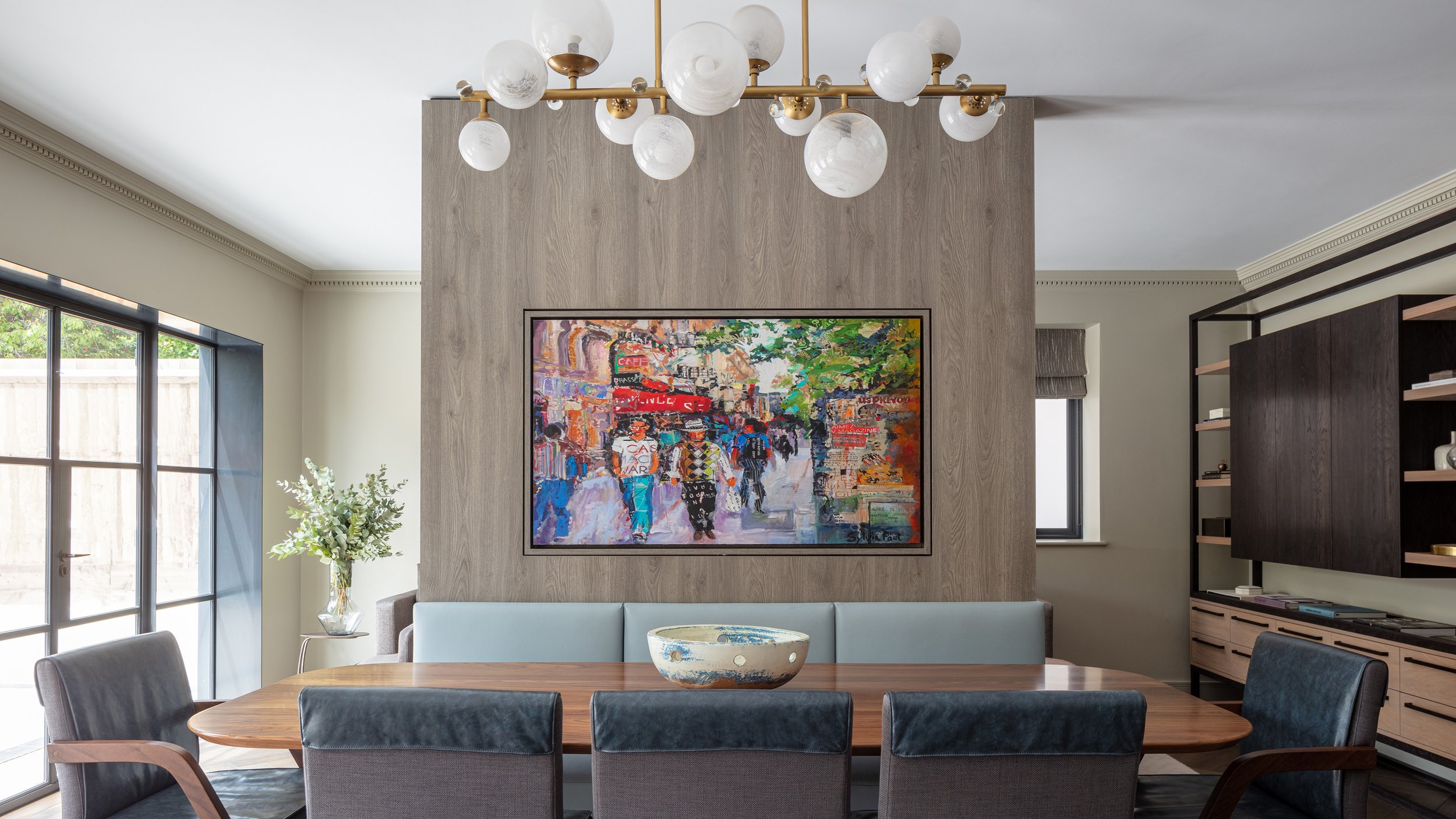
Photography, Roselind Wilson Design, Richard Waite.
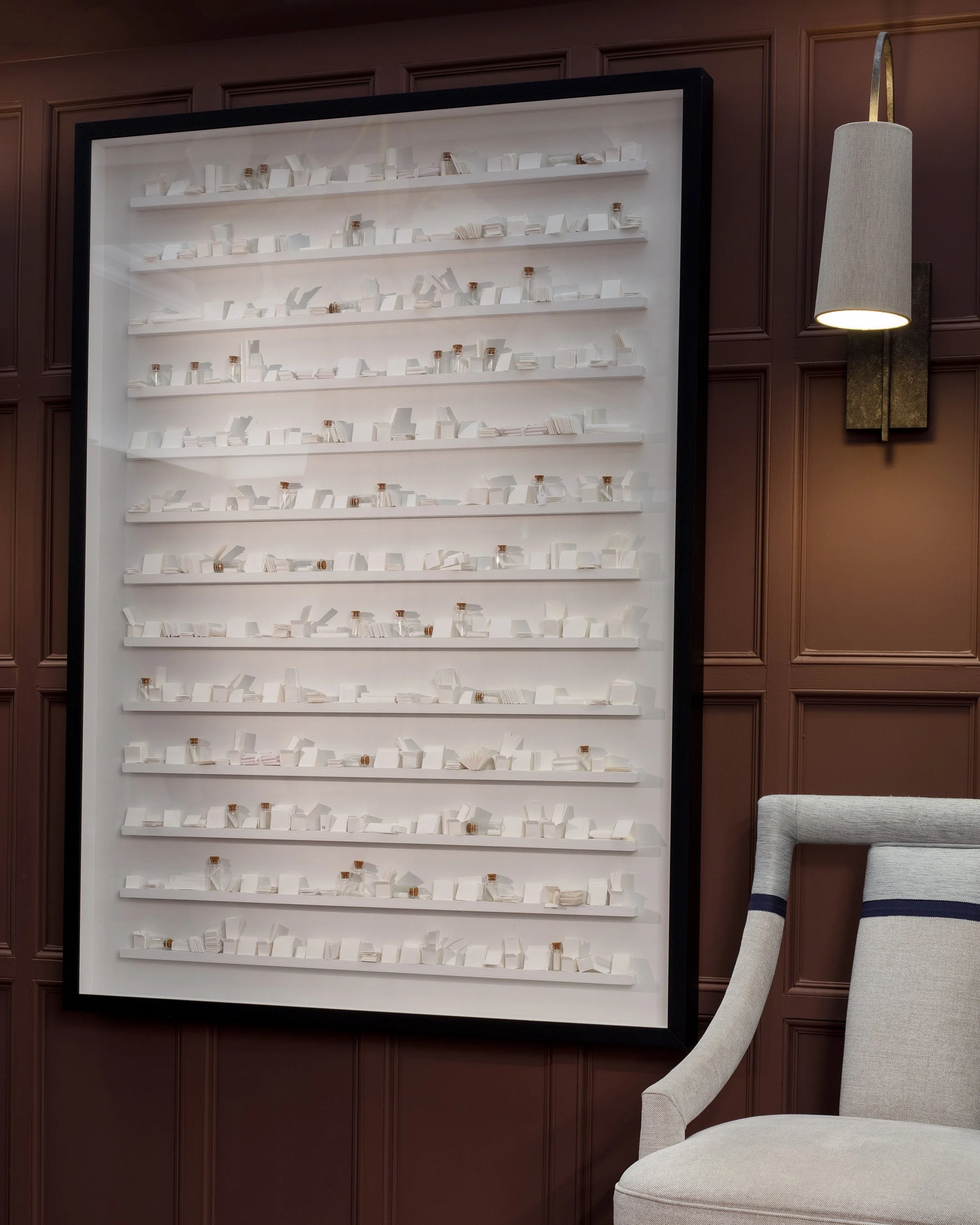
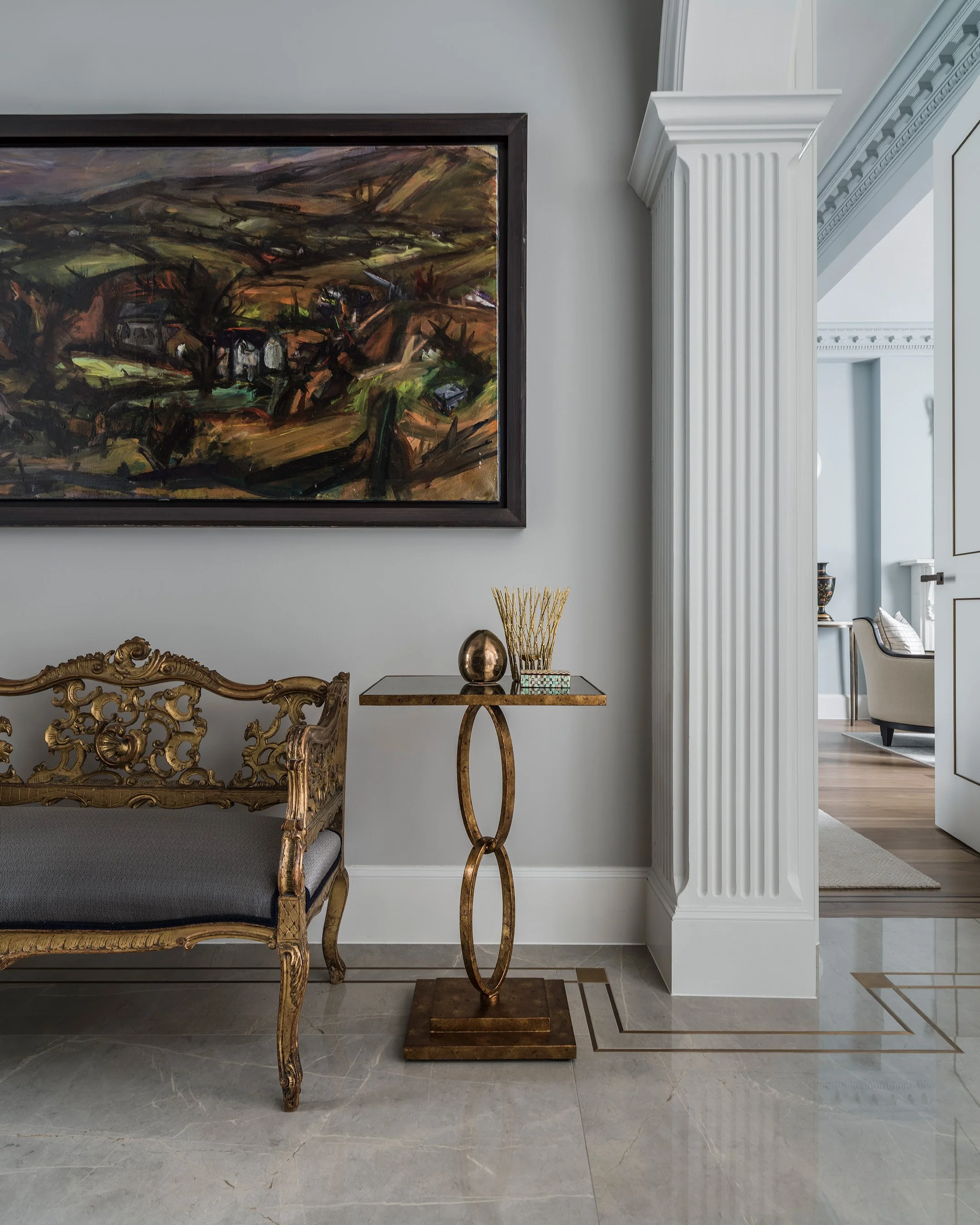
Art can absolutely make or break an interior, so it's always part of the conversation, but perhaps not in the way people expect.
One of the first things we ask clients is whether they already own any artwork. It could be a painting they've collected over the years, a photograph, something discovered whilst travelling or simply a piece that holds personal meaning. It doesn't have to be valuable in a monetary sense. Often the most important pieces aren't. I've never believed art is something you solve by throwing money at it, what matters is the story attached to them.
Art brings memory, personality and identity into a home and that's far more interesting than filling walls for the sake of it. Ideally, we like to understand that collection early in the design process, although it's often more fluid than that. Sometimes artwork is in storage, sometimes clients don't think to mention it, and occasionally it only reappears towards the end of a project.
I also think people's relationship with art has changed. Collections feel much more personal today. Alongside one or two significant pieces, you might find photographs, travel finds and objects gathered over a lifetime. I think that's a positive shift. I think the most successful collections have variety. Different moods, different scales and different perspectives. Sometimes a large, dramatic piece can completely transform a room. Equally, a small piece on a large wall can be incredibly powerful because of the restraint it creates. And that's why I think art remains so important. Not because it completes a room, but because it reveals something about the person living with it.
Working across residential projects throughout the UK, which type of brief tends to give you the most creative freedom? Is there a project typology or scale you haven't explored yet that you'd love to take on?
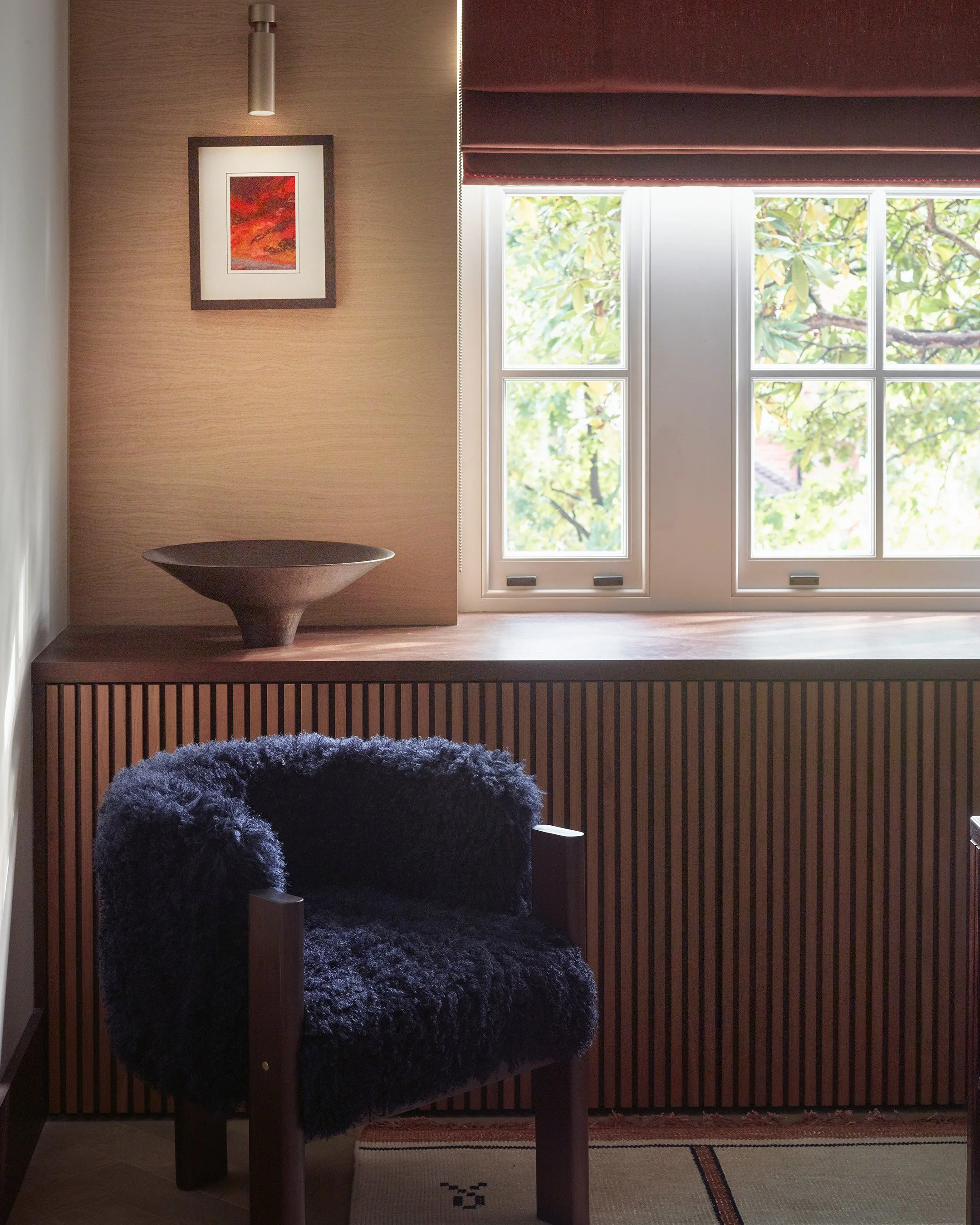
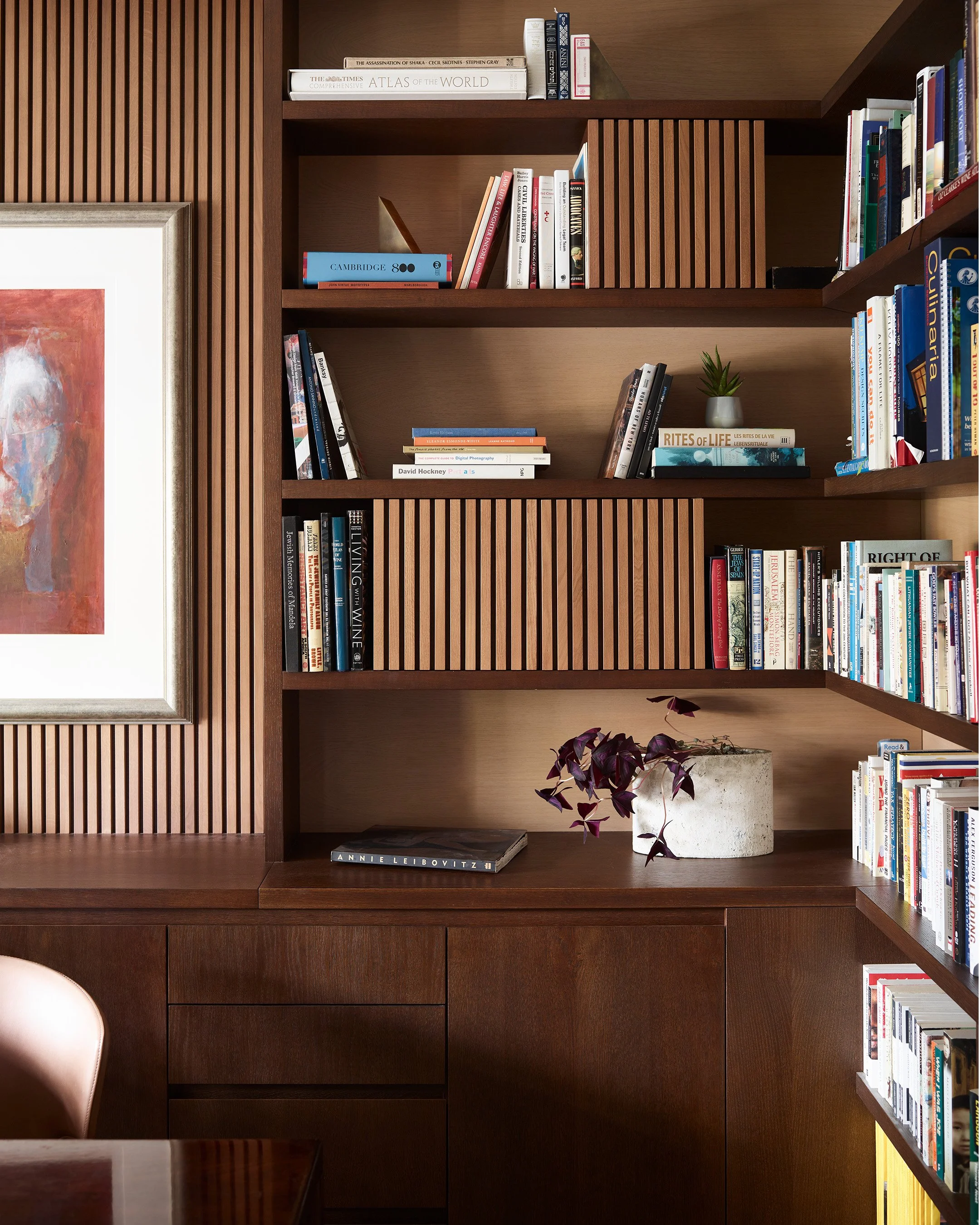
Photography, Roselind Wilson Design, Mary Wadsworth.
The projects that give me the greatest creative freedom are always those where clients have invested time in understanding the process before we begin. I don't mean they arrive with a fully formed design vision. Quite the opposite. I mean they've asked questions, understand the realities of a renovation and have taken the time to think about the journey they're about to embark on. When that happens, trust develops quickly, communication is stronger and there's a genuine partnership from the outset. It means we can spend our energy creating the very best solution rather than navigating uncertainty, and those are almost always the projects that deliver the strongest results.
Looking ahead, the area I'd most like to explore further is wellness through design. I'm currently studying neuroaesthetics because I'm fascinated by how our brains respond to space, light, texture and materiality, and how thoughtful design can genuinely influence the way we think, feel and function. For me, wellness isn't about creating spa like spaces. It's about understanding the relationship between psychology and design and creating homes that quietly support people's mental and physical wellbeing.
Travel is often a source of creative renewal. Are there any destinations you consistently return to, or recent discoveries you would recommend to our readers seeking culture, design and atmosphere?

Sicily, Italy.
Travel has always been one of my greatest sources of inspiration. I genuinely believe it broadens your perspective, not just creatively, but personally. Experiencing different cultures, ways of living and ways of seeing the world inevitably influences the way you approach design.
If there is one place I return to time and again, it's Sicily. There is an authenticity there that I find endlessly inspiring. Despite its extraordinary history and beauty, it remains deeply connected to its roots. Life feels less driven by excess and more centred on community, craftsmanship, food and simple daily rituals. That sense of humility is something I really value. As I've become more experienced, both personally and professionally, I've found myself placing greater importance on experiences than possessions. Sicily reflects that perfectly. It has a remarkable ability to quieten the mind, create space for reflection and reconnect you with what really matters.
From a design perspective, there is inspiration everywhere. The architecture, weathered materials, layered history, incredible quality of light and effortless relationship between indoor and outdoor living all leave a lasting impression. But more than anything, it's the atmosphere. It's a place that reminds me that great design isn't about excess. It's about creating spaces that feel authentic, emotionally resonant and deeply connected to the people who inhabit them.
Whenever I need to recharge creatively, Sicily is never far from my mind.
Beyond travel, are there any restaurants or cocktail bars whose atmosphere, materiality or sense of style you find especially compelling, spaces you return to again and again?
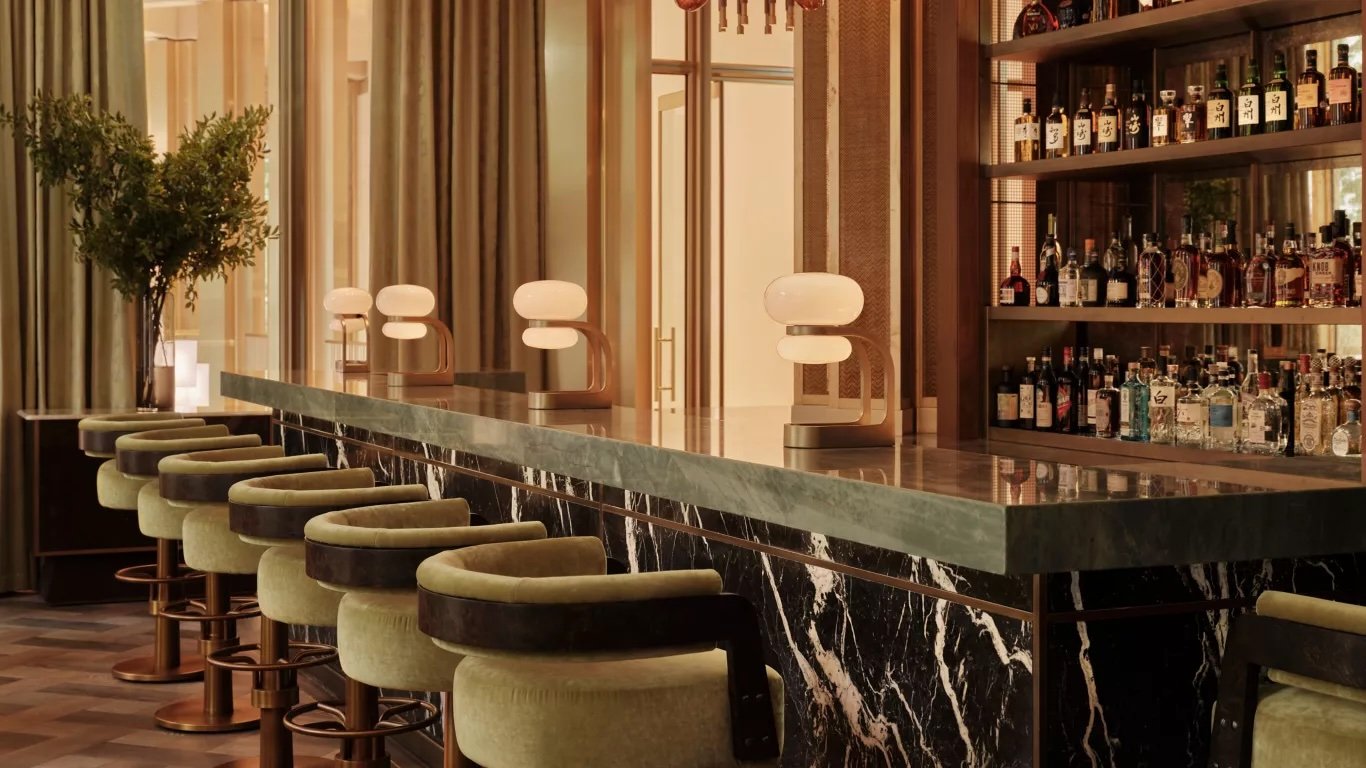
Photography, The Chancery Rosewood Hotel, London. Tobi Masa.
The funny thing is, anyone who knows me well will tell you that I hardly ever take photographs when I travel. It drives people mad. They'll say, don't you want the memories. But for me, the memory comes from being completely present. I don't want to spend the experience looking at it through a screen. I'd much rather absorb the atmosphere, the materials, the light and the feeling of being there. That probably explains why I don't have a definitive list of favourite restaurants or bars. I tend to enjoy a place intensely, take from it what it has to offer, and then move forward.
One recent exception would be The Chancery in London. It's an extraordinary space, beautifully layered and incredibly detailed. Equally memorable was a tiny tea house I stumbled across in Japan. It couldn't have been more different. Just a handful of seats, beautifully simple materials and an almost meditative sense of calm. Those two places couldn't be further apart aesthetically, yet they share something important. Neither relies on style alone. They create a genuine emotional response. Ultimately, that's what stays with me. Not necessarily the name of the restaurant, but the experience it created.
What would you like to see more of in the design world? And finally, what would you like to see less of in the design world?
I've combined these two questions because, the more I thought about them, the more I realised they were really asking the same thing.
Rather than saying I'd like to see more or less of a particular design style or trend, I'd like to see more support for designers themselves. People often underestimate just how many roles a designer must play. On any given project your part creative, part project manager, part negotiator, part financial planner, part psychologist and, at times, part problem solver, coordinating consultants, contractors and suppliers, managing budgets, navigating legal considerations and making hundreds of decisions that clients may never even be aware of. It's an incredibly demanding profession.
Yet I still think there can be a misconception that interior design is somehow less complex or less valuable than many other professional services. I'd love to see greater recognition of the expertise the industry requires and, with that, greater transparency around fees, better sharing of knowledge and stronger support for designers navigating the commercial side of the profession.
Ultimately, I'd like to see the industry place more value on the people behind the work. When designers are properly supported and respected, everyone benefits, including the clients.
And if that means I'd like to see less of anything, it would simply be less of the outdated perception that interior design is a luxury or a superficial profession. Good design is incredibly complex, and the people delivering it deserve to be recognised as the professionals they are.
Photography, Roselind Wilson Design.
DISCOVER FLUXX TRAVEL